




Table of Contents
- What is NAD?
- Why NAD Levels Matter as We Age
- What NAD Levels Are Considered Normal?
- Do NAD Levels Really Decline With Age?
- NAD Levels by Age Group
- Why NAD Levels Drop With Age
- NAD Levels Differ Across Tissues
- Differences Between Men and Women
- Lifestyle Factors That May Affect NAD Levels
- Can NAD Levels Be Supported as You Age?
- Final Words
- FAQs
NAD levels tend to decline as people get older, and research suggests the drop often becomes more noticeable from the late 20s into midlife.
Many sources describe a general pattern where levels are highest in early adulthood, then gradually fall, with a sharper dip for many people in their 40s and 50s.
Key Takeaways:
-
NAD levels are generally highest in early adulthood and tend to decline gradually with age.
-
Many studies report a more noticeable drop in NAD levels during midlife, often between the 40s and 60s.
-
What is considered “normal” depends on age, tissue type, and how NAD is measured, not one fixed number.
-
Lifestyle habits and NAD precursors may support NAD levels, but they do not fully stop age-related decline.
Disclaimer: This content is for educational purposes only and is not intended as medical advice. Always consult a qualified healthcare professional before starting any dietary supplement.
Cellular NAD+ booster with ultra‑pure NMN and Resveratrol, at research‑backed doses.*
NMN + RESVERATROL
What is NAD?
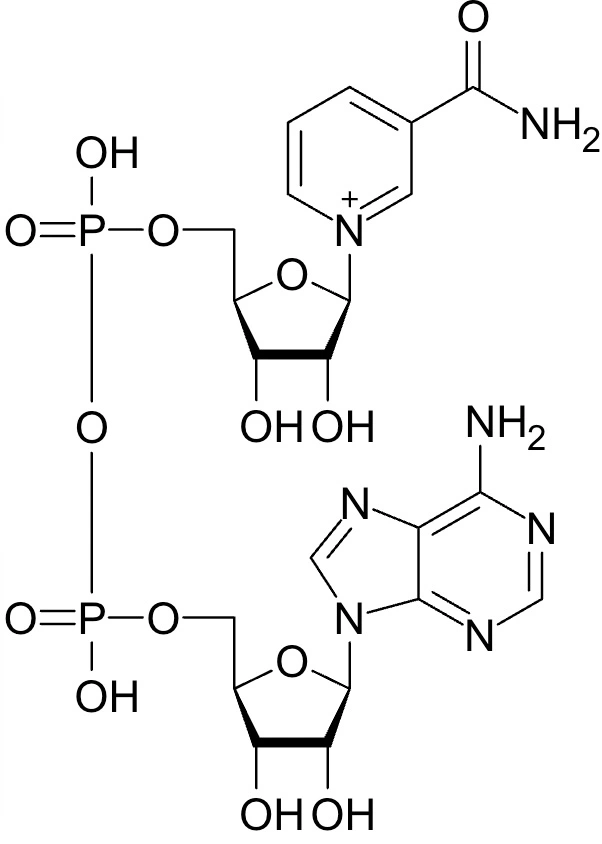 NAD, short for nicotinamide adenine dinucleotide, is a helper molecule your cells use to turn food into usable energy and support normal cell repair. You can think of it like a tiny “work partner” inside the cell that helps key jobs run smoothly.
NAD is found in every cell. It often gets talked about in aging because it is involved in processes linked with how cells handle stress over time, including energy production and DNA repair.
One simple way to picture it is this. Your cells have daily chores. NAD helps them get those chores done. When NAD levels trend lower, some of those chores may run less smoothly, especially in tissues that have high energy demands.
Why NAD Levels Matter as We Age
-v1767994862802.webp) As we age, the body often deals with more wear and tear. At the same time, some systems that help maintain and recycle cell resources may slow down. Research has linked NAD to several of the same “maintenance” pathways that tend to change with age (1).
As we age, the body often deals with more wear and tear. At the same time, some systems that help maintain and recycle cell resources may slow down. Research has linked NAD to several of the same “maintenance” pathways that tend to change with age (1).
NAD matters because it supports basic functions that many people notice in everyday life, even if they never hear the word “NAD” at all.
Energy production inside cells, especially in high-demand tissues like muscle and brain
DNA repair activity that helps cells respond to damage over time
Metabolic functions that help cells manage fuel and stress
Cellular signaling linked with how the body responds to inflammation and aging-related strain
What NAD Levels Are Considered Normal?
There is no single NAD number that applies to everyone. In real life, “normal” usually means falling within reference ranges seen in clinical testing, while also taking age, tissue type, and measurement method into account.
Most discussions around normal NAD levels focus on whole blood NAD+, because it is easier to measure consistently. Intracellular and tissue-specific levels exist too, but they vary widely and are harder to compare across people.
Here is how NAD levels are often described in practical, lab-based terms.
These ranges are not diagnostic. They are reference points used to interpret lab results alongside age, health status, and symptoms.
Do NAD Levels Really Decline With Age?
Research has consistently observed an age-related decline in NAD in humans and in many animal models, although the exact pattern can differ by tissue, lifestyle, and how NAD is measured.
In plain terms, the trend usually looks like this. Levels are often higher earlier in life, then fall gradually, and for many people, the decline becomes more noticeable in midlife.
Some sources describe the drop as moderate across adulthood, while others describe a sharper dip in the 40s to 60s range.
It is also worth saying out loud that “NAD level” is not one single number. Whole blood measurements, intracellular measurements, and tissue levels can tell slightly different stories.
NAD Levels by Age Group
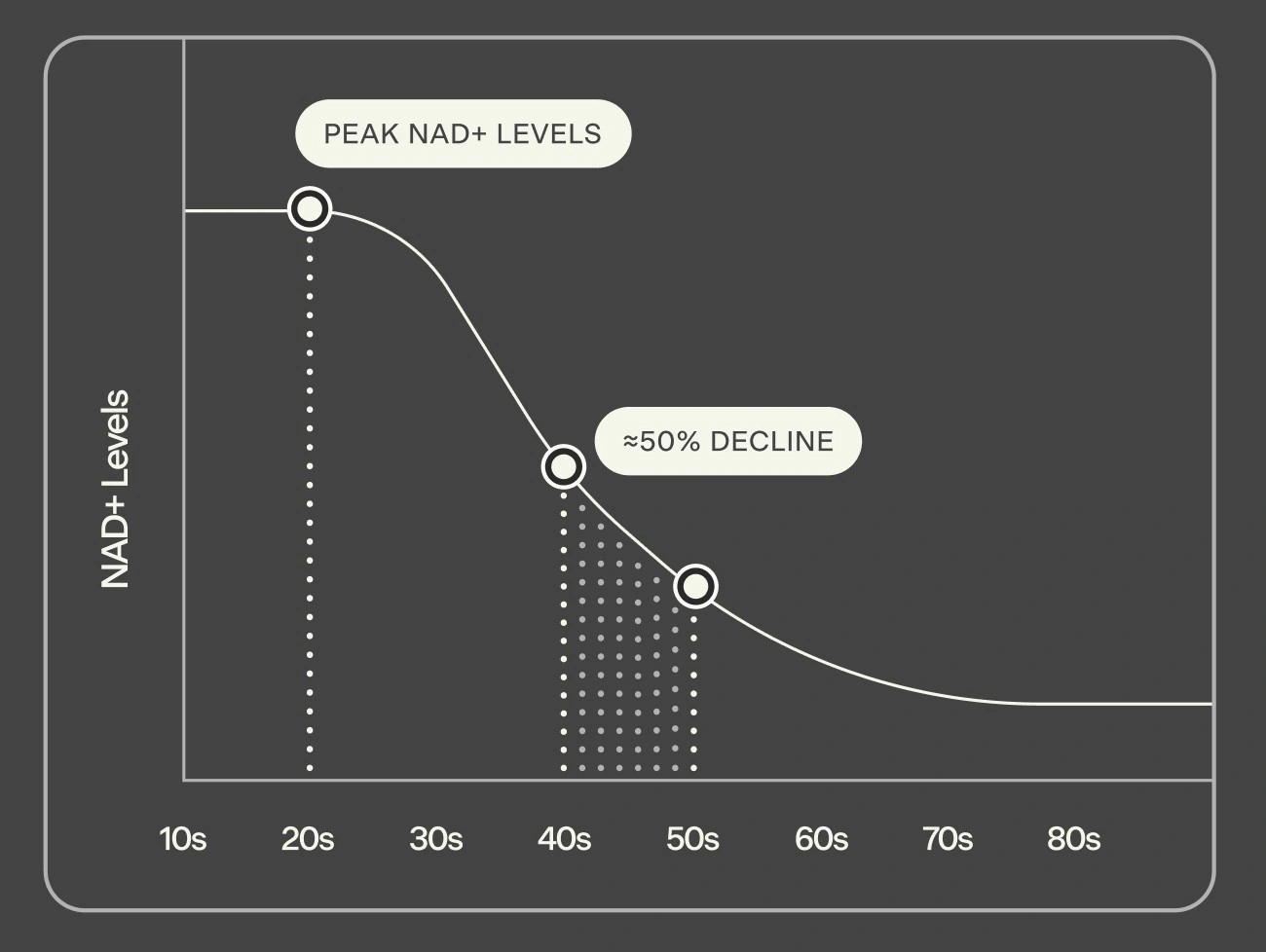 NAD levels tend to peak in early adulthood, then gradually decline, with research often describing a sharper drop for many people in midlife.
What is “normal” depends on what is being measured, but some clinical reference ranges for whole blood NAD+ are often described around 40 to 100 micromolar, with values below about 40 micromolar sometimes considered suboptimal.
That big picture helps, but most readers want the timeline. Below is a practical way to explain the age patterns people commonly see discussed, with the important reminder that individual results can vary.
Childhood and Teens
NAD-related systems are generally thought to be active during growth and development. In this stage, the body is building tissue, adapting quickly, and running a lot of repair and growth programs.
Most studies describe NAD levels as relatively high and steady in early life.
Direct human reference ranges by age are not always clearly established in a way that works like a standard cholesterol chart, but the general trend described is “higher earlier, lower later.”
Early 20s
This is often described as the peak period. Many sources describe NAD levels as being at their lifetime high point in the early 20s, supporting strong cellular energy and repair capacity.
If you want a simple line for readers, it is this. Early adulthood is typically when the body has the most metabolic flexibility and repair capacity, and NAD is one of the helpers involved in those processes.
Late 20s to 30s
Research summaries often suggest the gradual decline starts somewhere around the mid to late 20s, then continues through the 30s.
For a lot of people, nothing feels dramatically different year to year. But at the cellular level, some “maintenance” systems may start to run a little less efficiently.
This is also the age range where lifestyle can start to matter more. Sleep quality, stress, weight changes, and activity patterns may influence what a person’s baseline looks like, even though age-related decline still shows up as a general trend.
40s to 50s
This is the period many sources describe as the most noticeable drop. Some research summaries and clinical discussions describe NAD+ levels falling by roughly 40 to 50% by around age 50, compared with young adult levels (2).
Another commonly repeated finding is that studies have reported a roughly 50% decline between ages 40 and 60, though the exact numbers can vary based on the sample and how NAD was measured.
A helpful way to explain why this stage feels “steeper” is the supply and demand idea.
With age, the body may be dealing with more DNA damage and more low grade inflammation, which can raise the demand for NAD, while production and recycling pathways may not keep up as well as they did in youth.
60s and Beyond
NAD levels often continue trending downward in older age, but variability tends to widen. Two people at the same age may have very different numbers depending on health status, medications, metabolic health, and the testing method used.
Some sources describe very low levels in older groups compared with youthful levels, but exact percentages are not consistent across all measurement methods.
Research often shows continued decline with age, and some studies report large differences by the time people reach older decades, but the size of the drop is not identical across tissues or individuals.
NMN + RESVERATROL
Cellular NAD+ booster with ultra‑pure NMN and Resveratrol, at research‑backed doses.*
Why NAD Levels Drop With Age
NAD levels tend to fall as part of the natural aging process. This appears to happen for more than one reason, rather than a single cause.
As people age, cells often use more NAD to handle DNA damage, inflammation, and other stress signals. At the same time, the body’s ability to make and recycle NAD may slow down.
Several age-related changes are commonly linked with this decline.
Increased activity of NAD-consuming enzymes involved in DNA repair and immune response
Chronic, low-grade inflammation that raises NAD demand
Slower NAD production pathways inside cells
Changes in metabolism that affect how efficiently cells recycle NAD
A simple way to picture it is higher spending with a slower income. Over time, the balance shifts.
NAD Levels Differ Across Tissues
NAD levels do not drop at the same rate everywhere in the body. Muscle, liver, brain, heart, and skin all show different patterns, even in the same person.
Research has reported that some tissues, such as skeletal muscle and certain brain regions, may show earlier or steeper declines (3).
Other tissues appear more stable or decline more gradually. This helps explain why fatigue, muscle weakness, or cognitive changes may show up at different times for different people.
It also explains why blood tests only tell part of the story. Whole blood NAD+ offers a useful snapshot, but it does not perfectly reflect what is happening inside every tissue.
Differences Between Men and Women
-v1767995025326.webp) Research that looks at whole blood NAD+ has reported that men often have slightly higher baseline levels than women, especially earlier in adulthood (4).
Research that looks at whole blood NAD+ has reported that men often have slightly higher baseline levels than women, especially earlier in adulthood (4).
However, age-related patterns are not identical. Some data suggests men may experience a more noticeable drop later in life, particularly after age 60. Women, on the other hand, may show more fluctuation across age groups rather than a steady downward line.
Hormones are often discussed as a possible reason. Estrogen has been suggested as one factor that may influence NAD metabolism, which could help explain some of the observed differences. This area is still being studied, and conclusions remain cautious.
Lifestyle Factors That May Affect NAD Levels
Lifestyle does not stop age-related NAD decline, but it may influence where someone falls within the normal range.
Factors often discussed in research and clinical contexts include:
Regular physical activity, especially aerobic and resistance exercise
Sleep quality and consistent sleep patterns
Body weight and metabolic health
Diet quality and overall calorie balance
Chronic stress and inflammatory load
Alcohol intake and smoking
Lifestyle support may help maintain healthier baseline levels, but research suggests it does not fully counter the underlying age-related trend on its own.
Can NAD Levels Be Supported as You Age?
-v1767995669171.webp) Research suggests NAD levels may be supported as people age, but they do not appear to stay at youthful levels on their own. Lifestyle habits help, yet age-related decline still shows up in most people over time.
Research suggests NAD levels may be supported as people age, but they do not appear to stay at youthful levels on their own. Lifestyle habits help, yet age-related decline still shows up in most people over time.
That is why discussions around NAD support usually focus on two areas. Daily habits that reduce unnecessary strain on cells, and targeted approaches that supply the body with building blocks it already uses to make NAD.
Lifestyle Support Comes First
Healthy routines create the foundation. They do not stop aging, but they influence how resilient cells remain as demands increase.
Regular movement, good sleep, and balanced nutrition are commonly linked with better metabolic health, which in turn may help maintain higher baseline NAD levels compared with a more sedentary or stressed lifestyle.
That said, research suggests lifestyle alone does not fully offset the decline seen with age, especially from midlife onward.
NAD Precursors: NMN and NR
NAD precursors are compounds the body uses to make NAD. Two of the most studied are NMN, nicotinamide mononucleotide, and NR, nicotinamide riboside.
Clinical studies have reported that both NMN and NR increase NAD-related markers in the blood. For example, research in adults has found that oral NMN, often studied in doses ranging from 250 to 500 milligrams per day, raised NAD byproducts in circulation (5).
Similar findings have been reported with NR at comparable supplemental doses.
These studies show that precursors can raise NAD-related markers, but they do not prove long-term health outcomes. That distinction matters.
The research supports biological availability and short-term changes, while broader health effects remain an active area of study.
A Balanced Perspective on Support
Supporting NAD levels is not about chasing a single number. It is about understanding age-related change and choosing options that align with long-term health goals.
Most experts frame NAD support as one piece of a bigger picture that includes metabolic health, stress management, and realistic expectations about aging.
Final Words
NAD levels tend to be highest in early adulthood and gradually decline with age, with many people seeing a more noticeable drop in midlife.
Research has linked this pattern to increased cellular demand, slower production, and differences across tissues and between men and women.
Normal NAD levels are best understood as reference ranges rather than fixed targets. Lifestyle habits may help maintain healthier baselines, while NAD precursors like NMN and NR have been shown to raise NAD-related markers in human studies, though research is still ongoing.
At Omre, we focus on supporting cellular health with formulas built around research-informed ingredients and thoughtful dosing. 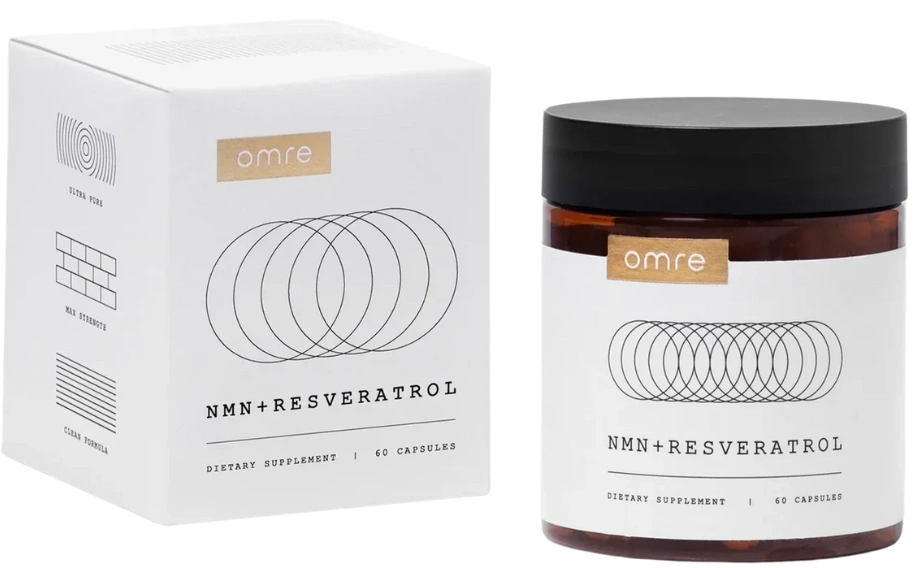 Our NMN + Resveratrol is designed to complement healthy routines, not replace them, and to support the pathways the body already uses as it ages.
FAQs
At what age do NAD levels start to decline?
Research suggests NAD levels often begin a gradual decline in the late 20s to early 30s, though the pace varies by individual. Many people do not notice changes until later decades.
How much do NAD levels drop by middle age?
According to research summaries, NAD+ levels have been reported to drop by roughly 40 to 50 percent by midlife, particularly between ages 40 and 60. Exact numbers depend on how levels are measured.
Are NAD levels different in men and women?
Studies measuring whole blood NAD+ have reported slightly higher baseline levels in men, with different age-related patterns between sexes. Hormones are thought to play a role, but this area is still being studied.
Can lifestyle changes slow NAD decline with age?
Healthy habits like exercise, sleep, and balanced nutrition may help support baseline NAD levels. Research suggests they do not fully prevent age-related decline on their own.
What is considered a normal NAD level?
Normal ranges depend on the test, but whole blood NAD+ levels around 40 to 100 micromolar are often described as typical reference values. Results are usually interpreted alongside age and health context.