




Table of Contents
NAD plays a quiet but steady role in how cells turn food into energy and support normal repair systems. A precursor to NAD is one way the body keeps this process going.
This article explains what that means, why NAD levels change with age, and how the body produces NAD through well-studied biological pathways.
Disclaimer: This content is for educational purposes only and is not intended as medical advice. Always consult a qualified healthcare professional before starting any dietary supplement.

NMN + RESVERATROL
Cellular NAD+ booster with ultra‑pure NMN and Resveratrol, at research‑backed doses.*
What Does “Precursor to NAD” Mean?
A precursor to NAD is a compound the body uses as a starting material to make NAD. In simple terms, it acts as a building block. Without these building blocks, cells cannot produce enough NAD to meet everyday energy and repair needs.
These precursors enter the body through food or supplements and are converted into NAD through specific enzyme-driven steps.
Each precursor follows a defined biological route, which helps explain why some compounds raise NAD levels more efficiently than others.
Scientists study NAD precursors because NAD levels tend to decline with age. Understanding these inputs helps researchers learn how the body maintains normal cellular function over time, without relying on external NAD itself.
Why NAD Levels Decline Over Time
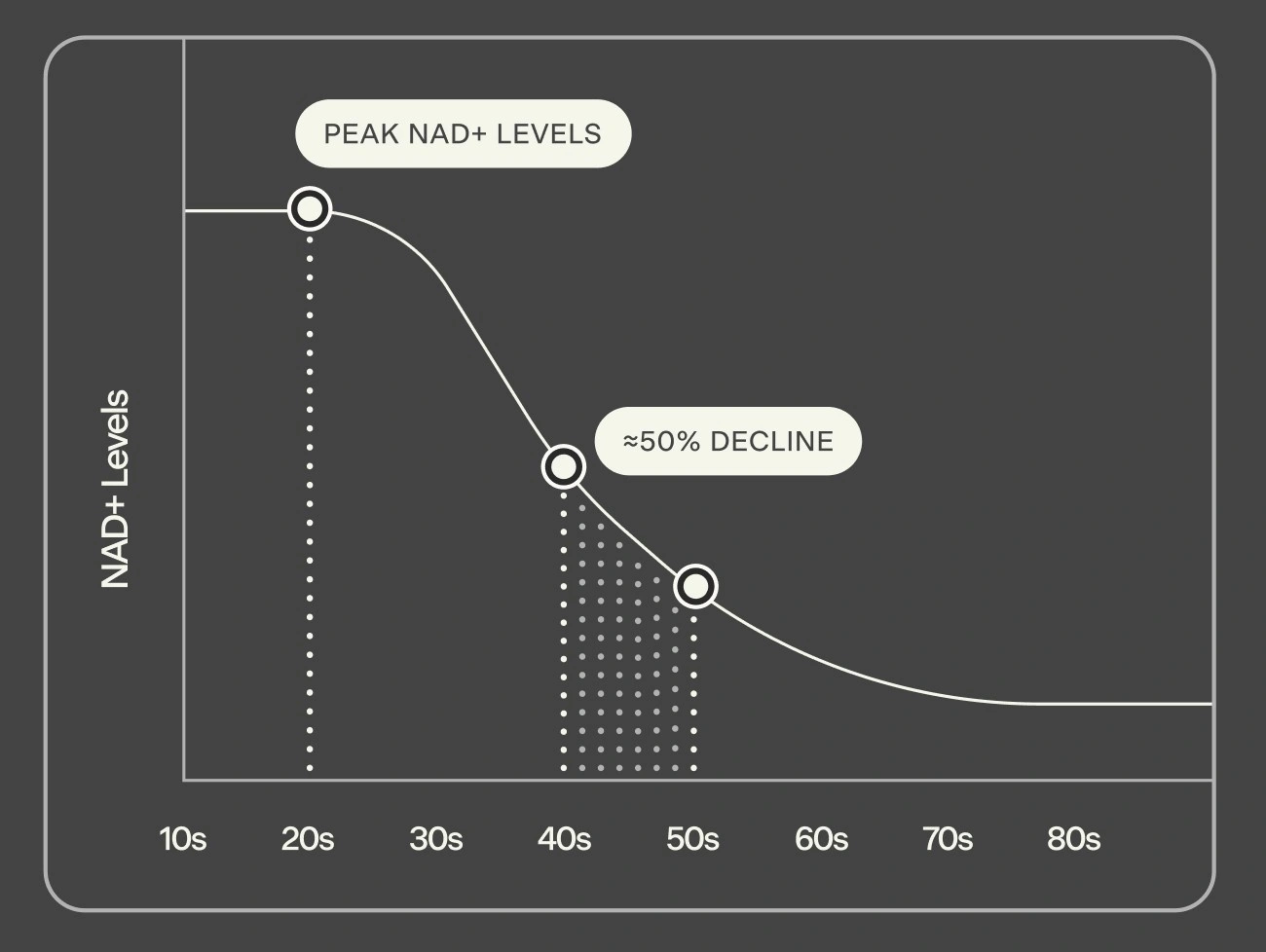 NAD levels naturally decrease as part of aging. This decline is not caused by a single factor but by a combination of biological changes that affect how cells use and recycle NAD.
Several factors are linked to this process:
Cells use more NAD during stress and repair processes.
Enzymes that recycle NAD become less active with age.
Chronic inflammation increases NAD consumption.
Mitochondria become less efficient over time.
As NAD availability drops, cells rely more heavily on precursors to maintain balance. This is why NAD precursors are often studied in aging and metabolic research.
How NAD Is Made in the Body
The body produces NAD through several tightly regulated pathways. Each pathway uses different precursors and enzymes, but all lead to the same end result: usable NAD inside cells.
The three main NAD production pathways include:
Salvage Pathway: Recycles vitamin B3 compounds like nicotinamide back into NAD. This is the primary pathway used in most tissues.
Preiss Handler Pathway: Converts nicotinic acid into NAD through a multi-step process. This pathway has been known for decades and is well-documented.
De Novo Pathway: Creates NAD from the amino acid tryptophan. This route is more complex and energy-intensive but plays a supporting role in NAD balance.
Together, these pathways allow the body to adapt NAD production based on diet, metabolism, and cellular demand.
9 Known Precursors to NAD+
-v1766694578290.webp) Researchers have identified several compounds that can act as a precursor to NAD. Each one supports NAD production through a specific biological pathway, and the level of evidence varies depending on how extensively it has been studied in humans.
Researchers have identified several compounds that can act as a precursor to NAD. Each one supports NAD production through a specific biological pathway, and the level of evidence varies depending on how extensively it has been studied in humans.
1. Nicotinamide Mononucleotide (NMN)
Nicotinamide mononucleotide is a naturally occurring compound that plays a direct role in the NAD salvage pathway. It is only one step away from NAD, which is why it has received growing attention in human research.
Key findings:
Human studies report that NMN supplementation is generally well tolerated at doses up to 900 mg per day (1).
Clinical trials show NMN can increase blood NAD levels, with larger doses producing greater changes (2).
After 12 weeks, elderly men showed modest improvements in grip strength and walking speed (3).
In older adults, NMN intake was associated with improved walking performance compared to placebo (4).
Over the study period, NMN groups showed stable biological age markers while placebo groups showed expected age-related changes (5).
2. Nicotinamide Riboside (NR)
Nicotinamide riboside is a form of vitamin B3 that converts to NMN inside cells before becoming NAD. It follows the NRK pathway and has been examined in multiple human studies.
Key findings:
Supplementation with NR increased blood NAD levels in healthy adults (6).
Older adults with mild cognitive impairment experienced a measurable rise in NAD levels after NR intake (7).
Human trials report a favorable safety profile, including at higher daily doses up to 2000mg daily (8).
Early research suggests NR may be associated with changes in inflammatory markers in specific clinical populations (9).
Some human data suggest NR may influence muscle-related cellular processes (10).
3. Nicotinic Acid (Niacin)
Nicotinic acid was one of the first compounds identified as a precursor to NAD. It follows the Preiss Handler pathway and has a long history of clinical research.
Key findings:
Large analyses show niacin use was associated with fewer cardiovascular events in specific study populations (11).
Niacin has been shown to influence cholesterol and triglyceride levels (12).
Imaging studies found changes in arterial plaque when niacin was used alongside standard therapies (13).
Long-term follow-up studies reported lower mortality in certain patient groups (14).
NMN + RESVERATROL
Cellular NAD+ booster with ultra‑pure NMN and Resveratrol, at research‑backed doses.*
4. Nicotinamide (Niacinamide)
Nicotinamide is the most common dietary form of vitamin B3. It enters the NAD salvage pathway after being converted to NMN by the NAMPT enzyme.
Key findings:
Long-term use was linked to fewer precancerous skin lesions over time (15).
Nicotinamide supports normal DNA repair processes by helping maintain cellular energy after UV exposure (16).
In combination with other compounds, nicotinamide showed functional changes in glaucoma-related measures (17).
Clinical trials consistently describe nicotinamide as well-tolerated across a range of doses (18).
5. Nicotinic Acid Riboside (NAR)
Nicotinic acid riboside is a less studied NAD precursor that appears to enter the Preiss-Handler pathway through NRK-related enzymes. Human data is currently limited.
Key findings:
Cell studies suggest NAR can support NAD production when other precursors are restricted. In experimental models, NAR maintained cell viability at lower concentrations than NR (19).
6. Dihydronicotinamide Riboside (NRH)
NRH is a reduced form of NR that may follow a more direct route to NAD production. Most available data comes from laboratory and animal research.
Key findings:
Laboratory studies showed NRH increased cellular NAD levels within a short time frame (20).
In animal models, NRH intake was associated with changes in metabolic markers (21).
Some immune cell studies observed inflammatory signaling under specific experimental conditions (22).
7. Tryptophan
Tryptophan is an essential amino acid that contributes to NAD production through the de novo pathway. This pathway involves multiple steps and plays a supporting role in NAD balance.
Key findings:
Higher tryptophan intake was associated with improved outcomes in nutritionally vulnerable populations (23).
Supplementation has been linked to changes in sleep duration and quality in controlled studies (24).
Dietary intake was associated with reduced anxiety and depressive symptoms in healthy participants (25).
Regular intake was associated with a lower reported risk of migraine in observational research (26).
8. Reduced Nicotinamide Mononucleotide (NMNH)
NMNH is a reduced form of NMN that converts to NADH before contributing to NAD balance. Research on NMNH is still in early stages.
Key findings:
Experimental studies show NMNH increased cellular NAD levels in laboratory models (27).
Comparative research suggests NMNH may enter tissues efficiently in controlled settings (28).
Preclinical studies reported acceptable safety signals at higher doses (29).
9. Dihydronicotinic Acid Riboside (NARH)
NARH is a newly identified reduced precursor that feeds into the Preiss-Handler pathway. Research on its role in humans is still emerging.
Key findings:
Which NAD+ Precursor Is Most Studied?
-v1766694173249.webp) NMN and NR are the most studied NAD precursors in human research. Both have been examined in multiple clinical trials and are supported by a growing body of safety and dosing data.
NMN and NR are the most studied NAD precursors in human research. Both have been examined in multiple clinical trials and are supported by a growing body of safety and dosing data.
NMN and NR stand out because they sit close to NAD in the body’s production pathways. This allows researchers to measure changes in NAD levels more directly, especially in blood and tissue samples.
Human studies have also looked at how these compounds are absorbed, tolerated, and processed over time.
Other NAD precursors remain important from a biological perspective, but most of the current human evidence focuses on NMN and NR. This is why they are often discussed first in research reviews and medically reviewed articles.
Food Sources That Act as Precursors to NAD+
-v1766694306148.webp) Small amounts of NAD precursors are found naturally in everyday foods, though dietary intake alone usually provides limited quantities.
Small amounts of NAD precursors are found naturally in everyday foods, though dietary intake alone usually provides limited quantities.
Milk and dairy products
Fish and seafood
Poultry and lean meats
Legumes such as beans and lentils
Whole grains and seeds
These foods contribute to baseline NAD production, but the levels are much lower than those studied in clinical research.
Final Words
NAD is a core molecule that supports normal cellular energy and repair processes. As NAD levels naturally decline with age, the body depends more on precursor compounds to maintain balance.
Research has identified several precursors, each following a specific biological pathway, with varying levels of evidence behind them.
Among these, NMN and NR have been studied most extensively in humans, with consistent findings around NAD level changes and tolerability.
Other precursors, including niacin, nicotinamide, and tryptophan, also play meaningful roles in NAD biology, even if their pathways are less direct.
At Omre, we focus on evidence-led formulations that align with this research. Our NMN + Resveratrol blend was developed with the most studied NAD precursor in mind, alongside complementary compounds that fit into a thoughtful, balanced wellness routine. 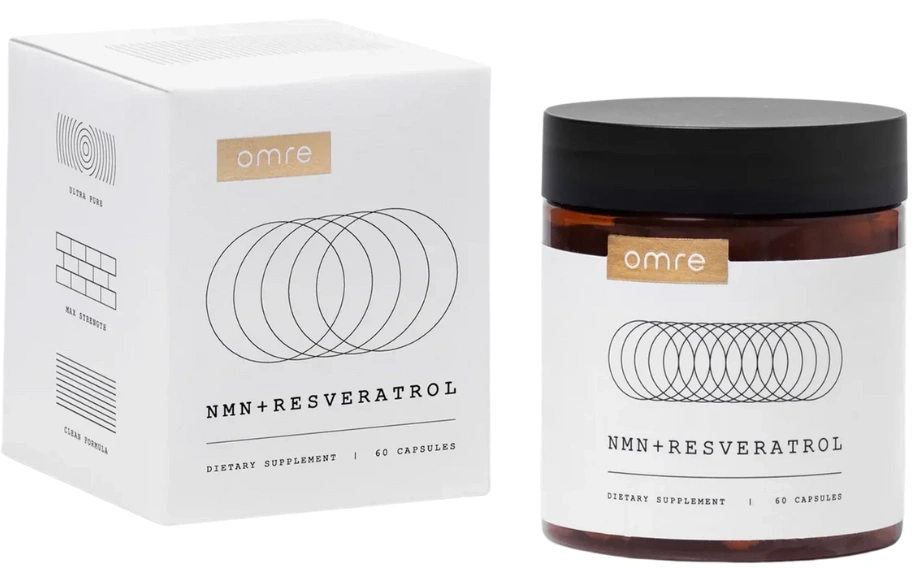 If you are looking for a research-informed starting point, you can learn more about our Omre NMN + Resveratrol and how it fits into long-term cellular health support.