


What Is Cellular Energy? A Clear Guide to Your Body’s Power Source
Updated on Apr 13, 2026


Medically reviewed by Dr Pedram Kordrostami, MD— Written by Dr. Dominic Gartry, MD
Updated on Apr 13, 2026
Table of contents
Cellular energy is the usable fuel your cells make from food so they can function, repair themselves, and stay alive. Every movement you make, every thought you have, and even quiet processes like breathing depend on this steady supply of energy inside your cells.
This energy is not a feeling. It is a biological process happening all the time, whether you notice it or not.
Key Takeaways:
Cellular energy is the usable fuel cells make from food to power daily function and repair.
ATP is the main energy molecule cells use to perform work inside the body.
Mitochondria play a central role in turning food into cellular energy.
Cellular energy production changes with age, making daily habits and nutrition more relevant over time.
Disclaimer: This content is for educational purposes only and is not intended as medical advice. Always consult a qualified healthcare professional before starting any dietary supplement.
What Is Cellular Energy?
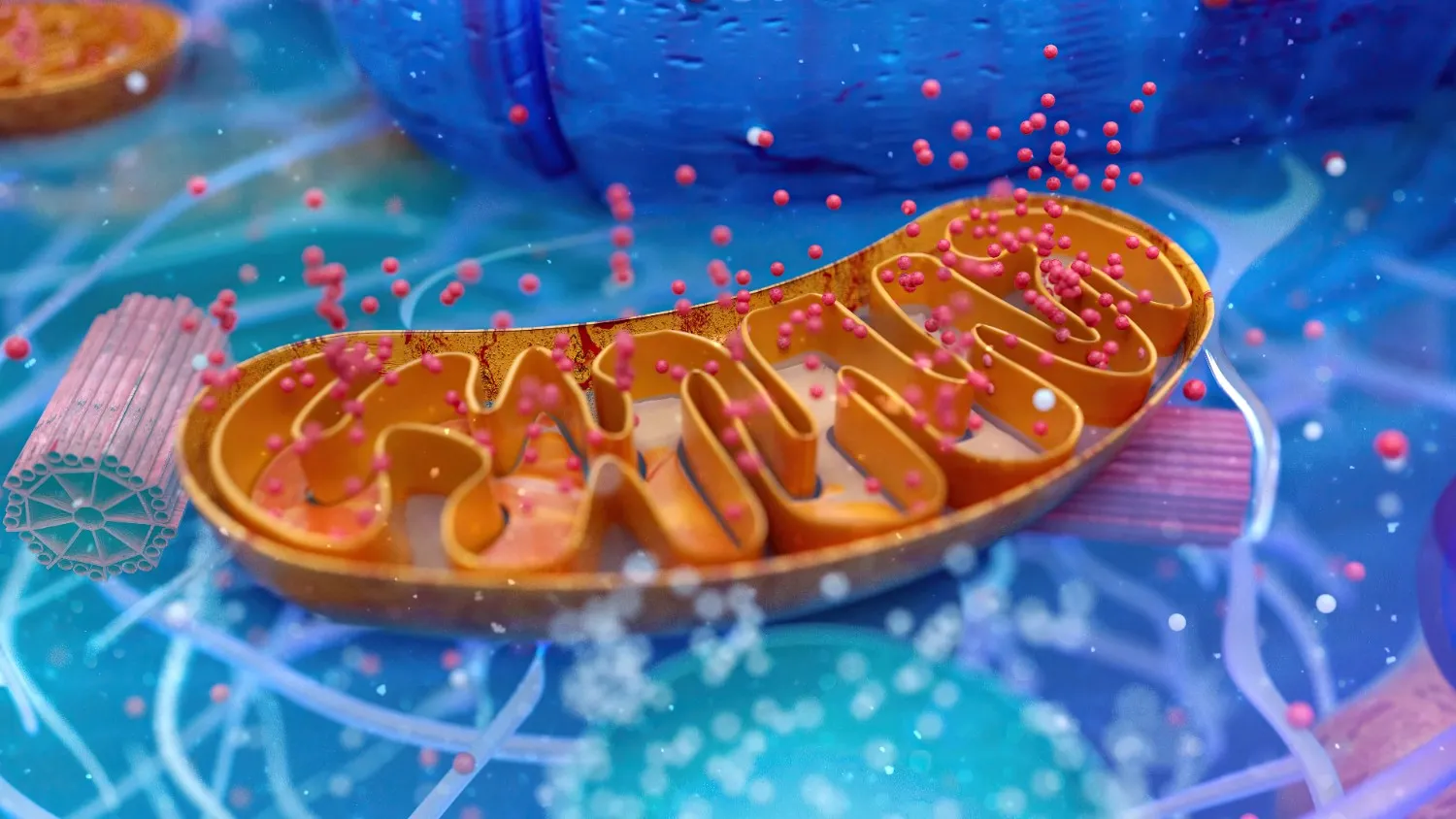
Cellular energy is the form of energy your cells use to do work. In simple terms, it is the power supply that keeps cells running. Without it, cells cannot maintain structure, send signals, or carry out basic tasks needed for life.
Your body does not use food directly as energy. Instead, cells break food down into smaller units and convert it into a usable form. That usable form is what people mean when they talk about cellular energy.
This process happens constantly. Even when you are resting or sleeping, your cells are still making and using energy to keep organs working and maintain balance in the body.
ATP and Why Cells Use It as Energy
Cells rely on a molecule called ATP, short for adenosine triphosphate, as their main energy source (1). ATP works like a rechargeable battery inside the cell. When a cell needs energy, it breaks one small bond in ATP and releases energy it can use right away.
After ATP releases energy, it turns into a lower energy form. The cell then rebuilds it back into ATP using energy from food. This cycle happens over and over, sometimes millions of times a day, in a single cell.
ATP is useful because it delivers energy in small, controlled amounts. Cells do not need large bursts of energy all at once. They need steady, precise releases of energy to support movement, repair, chemical reactions, and communication between cells.
The Role of Mitochondria in Energy Production
Most ATP is made inside structures called mitochondria. These are small parts inside cells that act as energy processing centers. Cells that work harder, like muscle cells, heart cells, and brain cells, contain more mitochondria because they need more energy.
Mitochondria take fuel from food and convert it into ATP through a series of steps. When mitochondria function well, cells can keep up with energy demands.
When their function slows, energy production may drop, which can affect how tissues and organs perform.
How Cells Turn Food Into Energy
Your body converts food into cellular energy through a process often called cellular respiration. This process follows a clear sequence, moving energy from food into ATP in a controlled way.
1. Glycolysis
Glycolysis is the first step and takes place outside the mitochondria. During this step, a glucose molecule is broken down into smaller pieces. This produces a small amount of energy and prepares fuel for the next stages.
Glycolysis does not require oxygen. It allows cells to start producing energy quickly, even before the fuel reaches the mitochondria.
2. Citric Acid Cycle
The next stage happens inside the mitochondria. Here, the fuel created during glycolysis goes through a series of reactions that release stored energy gradually.
This stage does not make much ATP directly. Instead, it prepares energy carriers that move energy forward to the final step.
You can think of this stage as organizing fuel so it can be used more efficiently later.
3. Electron Transport Chain
This final stage is where most ATP is produced. It takes place along the inner membrane of the mitochondria and relies on oxygen to work properly (2). Energy carriers from earlier steps deliver energy here, which is used to create a strong gradient that powers ATP production.
This step is efficient and tightly controlled. It allows cells to generate large amounts of ATP without damaging themselves, as long as oxygen and nutrients are available.
Why Cellular Energy Matters for Daily Health
-v1767928990687.webp)
Cellular energy supports every quiet and active process in your body. It allows cells to repair damage, send signals, and respond to daily stress. When energy production runs smoothly, most people feel steady, resilient, and able to recover from physical and mental demands.
When energy production struggles, the effects often appear slowly. It may show up as fatigue that does not match activity levels, slower recovery, or reduced focus.
Here are some everyday functions that depend on healthy cellular energy:
Muscle movement, from walking to breathing
Brain function, including focus, memory, and reaction time
Immune response, which relies on energy to identify and respond to threats
Tissue repair and renewal after stress or injury
How Cellular Energy Changes With Age
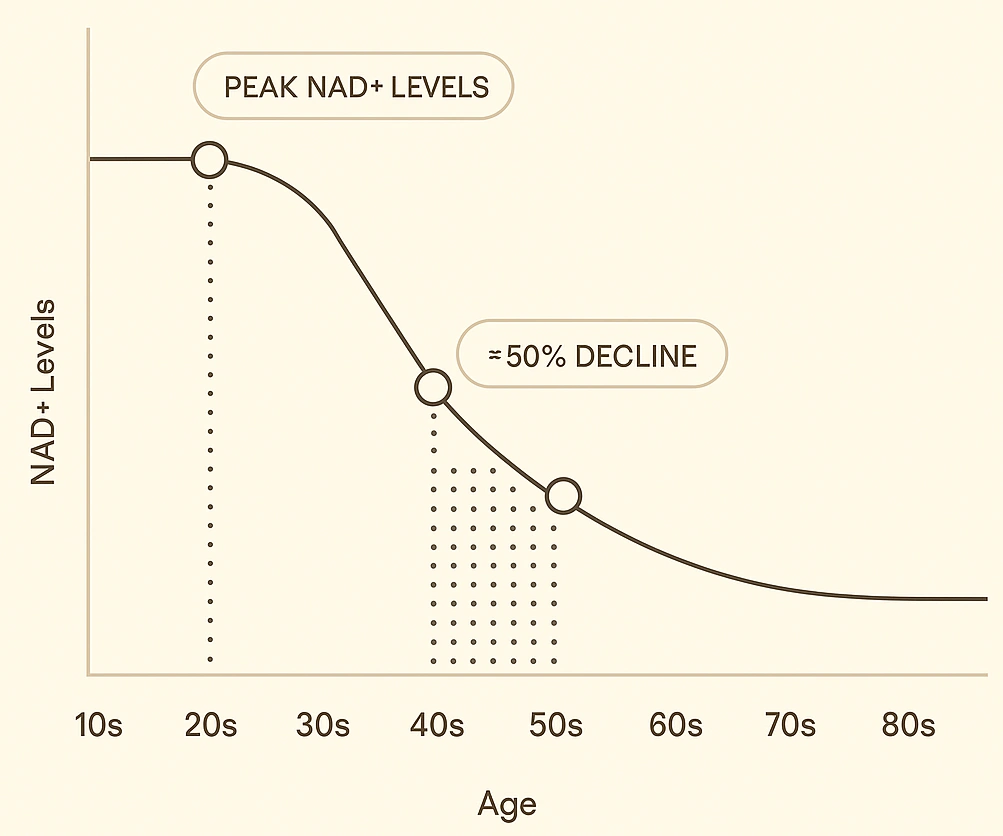
As the body ages, energy production inside cells tends to become less efficient. This change is gradual and varies from person to person. Research has linked aging with reduced mitochondrial efficiency, meaning cells may produce ATP more slowly over time (3).
Another factor often discussed in research is NAD+, a helper molecule involved in energy production inside mitochondria.
According to studies, NAD+ levels drop by roughly 50% between ages 40 and 60 (4). Lower NAD+ availability has been associated with slower energy metabolism in cells, although this area remains under active study.
These changes do not mean energy loss is inevitable. They help explain why supporting cellular processes becomes more relevant with age.
What Supports Healthy Cellular Energy
-v1767929461920.webp)
Daily habits play a large role in how well cells produce and manage energy. Small, consistent choices often matter more than dramatic changes.
Some supportive factors include:
Eating balanced meals with enough calories, protein, and healthy fats to supply energy-building blocks
Getting key micronutrients like B vitamins, magnesium, and iron, which help energy pathways work efficiently
Staying physically active, since regular movement has been associated with improved mitochondrial function
Prioritizing sleep and stress management, as much of cellular repair happens during rest
Using NAD precursors, such as NMN, which research has shown may increase NAD byproducts in the blood when taken in doses ranging from 100 to 500 milligrams, suggesting support for cellular energy pathways (5)
These approaches work together. No single habit controls energy production on its own.
Final Words
Cellular energy is the foundation behind how your body moves, thinks, and repairs itself.
It comes from food, is shaped by daily habits, and is managed by complex systems inside every cell. When these systems are supported, energy production tends to stay steadier across daily life and over time.
At Omre, we focus on making that support simple and grounded in research. Our NMN + Resveratrol formula is designed to support NAD-related pathways involved in cellular energy and aging, using clear doses and carefully selected ingredients.

If you are looking for a thoughtful way to support your cells as part of a healthy routine, Omre NMN + Resveratrol fits naturally into that approach.

About the medical reviewer
Dr Pedram Kordrostami, MD
Table of contents
