


NMN vs NR: What Research Shows and How to Choose the Right NAD+ Precursor
Updated on May 7, 2026


Medically reviewed by Dr Pedram Kordrostami, MD— Written by Dr. Dominic Gartry, MD
Updated on May 7, 2026
Table of contents
NAD+ drops steadily with age, and many people look for ways to support energy, metabolism, and daily cellular repair. This is where NMN and NR often come in.
Both molecules help raise NAD+, but they follow different steps in the body and may behave a little differently depending on the tissue.
NMN vs NR is a common question for anyone exploring healthy aging or trying to understand how to support natural energy production. Knowing how each precursor works can make your choice easier.
This breakdown gives you the key differences, what current research shows, and what these findings may mean for your health goals.
Key Takeaways
- NAD+ supports cellular energy metabolism and repair while levels naturally decline with aging and metabolic stress
- NMN enters the salvage pathway one step before NAD+ while NR must first convert into NMN inside cells
- NR has stronger published human trial data and demonstrated dose dependent increases in NAD+ levels
- Both NMN and NR appear generally safe in research and may support energy metabolism muscle function and healthy aging processes
- Choosing between NMN and NR depends on goals preference for clinical evidence storage stability and interest in emerging pathway research
Disclaimer: This article is for information only. Speak with a healthcare professional before using any supplement.
What NAD+ Does in the Body and Why Levels Drop with Age
-v1764018288552.webp)
NAD+ is essential for energy production. It helps your mitochondria turn food into ATP, which supports movement, metabolism, and daily cellular function. It also fuels sirtuins, the enzymes involved in DNA maintenance and stress response.
As you age, NAD+ levels tend to fall due to factors such as inflammation, long-term stress, poor sleep, and general metabolic strain. Research suggests that older adults may have lower NAD+ activity even with a healthy lifestyle (1).
Your body recycles NAD+ through the salvage pathway, where nicotinamide converts back into NMN and then into NAD+ (2). NMN and NR fit directly into this system and help supply the raw materials your cells use each day.
Lower NAD+ levels do not cause a single symptom, but they may influence energy, muscle recovery, and overall metabolic smoothness.
What Is NMN?
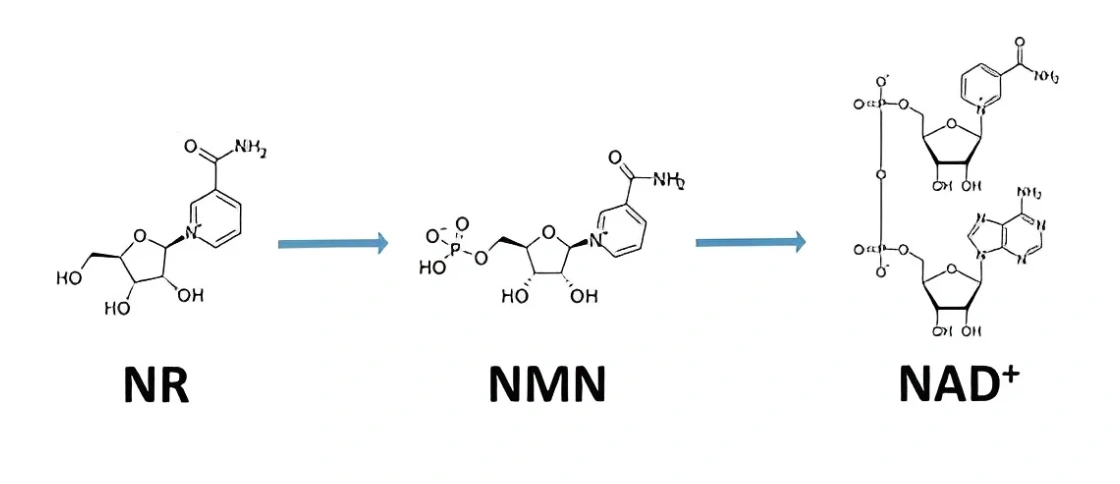
NMN is a precursor the body uses to produce NAD+. It sits one step before NAD+ in the salvage pathway and includes a phosphate group as part of its structure (1).
Small amounts of NMN are found in foods like broccoli, avocado, and edamame. While dietary levels are low, NMN fits directly into the recycling pathway your cells already use. This is one reason it is being studied in areas such as energy metabolism, muscle function, and aging biology (1, 4).
How the Body Converts NMN Into NAD+
Cells convert NMN into NAD+ through an enzyme called NMNAT. This step requires ATP, which donates an adenylyl group to NMN to form NAD+ (2). The process plays a key role in energy production and cellular repair across multiple tissues.
Earlier in the pathway, another enzyme called NAMPT converts nicotinamide into NMN (1). Together, these enzymes help maintain NAD+ levels throughout the day.
What Research Says About NMN
Human studies suggest that orally administered NMN is generally well tolerated at commonly tested doses. A clinical trial in healthy adults using 250 mg to 500 mg per day reported increases in NAD+ levels and related metabolites without serious side effects (6).
Animal studies suggest that NMN supplementation may support endurance, mitochondrial activity, and aspects of metabolic health. However, more human research is needed to confirm these effects (4).
What Is NR?
NR is a form of vitamin B3 that supports NAD+ synthesis through the salvage pathway. After entering the cell, NR is first converted into NMN, which is then converted into NAD+ (3, 4).
Because NR has a smaller structure, it can enter cells through specific nucleoside transporters. Once inside, enzymes called NRKs convert it into NMN in a step that requires ATP. NMNAT then completes the final step to NAD+, which also requires ATP (3, 5).
What Research Says About NR
Clinical research suggests that NR supplementation may increase NAD+ levels in a dose-dependent manner. In one study, a single oral dose increased NAD+ levels by up to 2.7-fold within hours. Longer-term studies using 300 mg to 1000 mg daily show sustained increases over several weeks (5).
NMN vs NR: Key Differences
NMN and NR both support NAD+ production, but they enter the pathway at different points and use different transport routes. Below is a simple comparison table to help you see the main points side by side.
| Category | NMN | NR |
|---|---|---|
| Structure | Larger molecule with a phosphate group | Smaller molecule without a phosphate group |
| Pathway Position | Enters salvage pathway one step before NAD+ | Converts into NMN first, then becomes NAD+ |
| Cellular Uptake | May use Slc12a8 in certain tissues | Uses equilibrative nucleoside transporters |
| Stability | Sensitive to heat | More stable across common conditions |
Key takeaways:
- NMN sits closer to NAD+ in the salvage pathway, while NR needs one extra step.
- NR uses established nucleoside transporters, which explains the strong human data.
- Both lead to the same final molecule, which is why many research findings overlap.
Is NMN or NR More Clinically Effective?
-v1764018753835.webp)
Current research shows that both NMN and NR can raise NAD+ levels, support metabolic processes, and appear safe in human studies.
NMN Clinical Findings:
- Human trials found that 250 mg to 500 mg of NMN was well tolerated and increased NAD+ related metabolites.
- Studies in postmenopausal women reported improvements in muscle insulin sensitivity (11).
NR Clinical Findings:
- Multiple human trials show that NR appears to raise NAD+ levels in a dose-dependent pattern (13).
- NR has a strong safety record in adults using 1000 mg per day (14).
Can You Take NMN and NR Together?
-v1764018710277.webp)
Some people take NMN and NR together because they enter the NAD+ pathway at different steps. Research on combined use is still early, so most people start with lower doses of each.
Which One Should You Choose?
Choosing between NMN and NR often comes down to your goals and comfort with the available studies.
Choose NR if:
- You want the option with more published human trials
- You prefer a precursor with GRAS status in the United States
- You want something stable in storage
Choose NMN if:
- You want a precursor that sits one step closer to NAD+
- You are interested in emerging research on muscle activity
- You prefer a compound studied for gut-related transporter activity
Should You Test Your NAD+ Levels Before Choosing?
Testing NAD+ levels can help you understand your baseline before choosing NMN or NR. A baseline test can show whether your levels are lower than expected for your age.
Final Words
Both NMN and NR play helpful roles in supporting the body’s natural NAD+ cycle. They both lead to the same final molecule your cells rely on for energy and repair.

Omre NMN + Resveratrol offers a research-guided combination that fits easily into a morning routine and supports the same pathway discussed throughout this article.
FAQs
Can NMN turn into NR first?
Yes, some tissues may convert NMN into NR before cellular uptake. After entering the cell, it can convert back into NMN and continue through the salvage pathway.
Does NR enter the brain faster?
NR is small enough to use nucleoside transporters that may help it reach certain tissues, including the brain. Most evidence comes from animal studies.
Will NMN raise NAD+ if Slc12a8 is low?
NMN can still support the salvage pathway even if transporter activity varies, as some tissues can convert it to NR outside the cell for absorption.
Is sublingual NMN better?
Sublingual forms are designed to bypass some digestive steps, but clear human data comparing sublingual vs oral NMN is still limited.
Do NMN or NR affect sleep?
Most studies do not report sleep-related side effects. People often take NAD+ precursors in the morning to match natural energy rhythms.

About the medical reviewer
Dr Pedram Kordrostami, MD
Table of contents


