


7 Best Quercetin Supplements in 2026 (Reviewed and Compared)
Updated on May 10, 2026


Medically reviewed by Dr. Sara Alisha Khan, MD, PGDMLE— Written by Dr. Dominic Gartry, MD
Updated on May 10, 2026
Table of contents
- Top Quercetin Supplements at a Glance
- How to Choose the Best Quercetin Supplement
- Why You Can Trust This Guide
- Best Quercetin Supplements in 2026
- What Is Quercetin?
- Which Form of Quercetin Is Best?
- Potential Benefits of Quercetin Supplements
- What to Avoid in a Quercetin Supplement
- Are There Any Side Effects of Quercetin?
- How Much Quercetin Do Most People Actually Need?
- Who Quercetin May Be Best For
- Who Should Be More Cautious With Quercetin
- Final Words
- FAQs
Quercetin supplements can look similar, but the form, dose, testing, and added ingredients can change which one makes sense for you.
Some products use plain quercetin. Others add bromelain for seasonal support, use phytosome delivery for absorption support, or combine quercetin with fisetin for a more targeted healthy aging formula.
This guide compares 7 quercetin supplements by formula quality, testing transparency, dose, price, bioavailability support, and best use case.
Key Takeaways:
- Quercetin is a plant flavonoid studied for antioxidant activity, inflammatory balance, immune signaling, and seasonal support.
- Many human studies use quercetin in the 200 to 1,000 mg daily range, with 500 mg being a common reference dose.
- Standard quercetin is usually the simplest option, while bromelain blends may appeal more for seasonal support.
- Quercetin phytosome may be worth considering if absorption support matters more than the highest milligram number.
- The right supplement depends on your goal, tolerance, budget, testing standards, and comfort with added ingredients.
Top Quercetin Supplements at a Glance
- Best Overall: Omre Quercetin + Fisetin
- Best for Sensitive Users: Pure Encapsulations Quercetin
- Best Budget Pick: Double Wood Quercetin + Bromelain
- Best Value: Nutricost Quercetin + Bromelain
- Best for Seasonal Support: NOW Foods Quercetin + Bromelain
- Best High-Dose Formula: Toniiq Ultra High Purity Quercetin
- Best Phytosome Formula: Thorne Quercetin Complex
Not every quercetin supplement is trying to do the same job. The quick comparison below shows how the top picks differ in form, dose, added ingredients, and overall use case.
| Product | Quercetin Form | Quercetin Dose | Extra Ingredients | Best for | Servings | Price |
|---|---|---|---|---|---|---|
| Omre Quercetin + Fisetin | Phytosome quercetin | 500 mg | Fisetin 100 mg | Overall cellular support | 30 | $49.00 |
| Pure Encapsulations Quercetin | Standard quercetin | 500 mg | None | Sensitive users | 30 | $29.00 |
| Double Wood Quercetin + Bromelain | Standard quercetin | 1,000 mg | Bromelain 200 mg | Budget-friendly seasonal support | 60 | $24.95 |
| Nutricost Quercetin + Bromelain | Standard quercetin | 880 mg | Bromelain 165 mg | Everyday value | 60 | $33.95 |
| NOW Foods Quercetin + Bromelain | Standard quercetin | 800 mg | Bromelain 165 mg | Seasonal support | 60 | $21.99 |
| Toniiq Ultra High Purity Quercetin | Standard quercetin | 1,000 mg | None | High-dose simplicity | 60 | $29.97 |
| Thorne Quercetin Complex | Phytosome quercetin | 250 mg | Bromelain 100 mg | Absorption-focused support | 60 | $54.00 |
How to Choose the Best Quercetin Supplement
The best quercetin supplement depends on what you want it to do. A high-dose product is not always the better choice, especially if the formula does not explain its testing, form, or added ingredients clearly.
Here is a simple way to compare them:
| Goal | What to Look For |
| Basic daily support | Standard quercetin around 500 mg |
| Seasonal support | Quercetin with bromelain |
| Absorption support | Quercetin phytosome or another enhanced-delivery form |
| Sensitive stomach | Fewer added ingredients |
| Healthy aging support | Quercetin paired with fisetin or other cellular-support ingredients |
| Better quality control | Third-party testing, GMP manufacturing, clear labeling |
Why You Can Trust This Guide
We compared quercetin supplements based on form, dose, added ingredients, testing transparency, allergen profile, price per serving, and fit for common use cases.
We gave extra weight to products that clearly explain their ingredient forms and quality standards. That matters because standard quercetin, quercetin with bromelain, and quercetin phytosome are not meant to serve the exact same purpose.
We also looked at tradeoffs. Some products offer higher doses, while others focus more on absorption support, cleaner formulas, or a more specific healthy aging angle.
We Looked Beyond Label Strength
A higher dose does not automatically mean a better supplement. We looked at whether each formula used standard quercetin or a more absorption-focused form, whether the serving size made practical sense, and whether the added ingredients matched the product’s purpose.
That helped us avoid treating the highest label dose as the automatic winner.
We Prioritized Quality Signals
Supplements can vary a lot in how clearly they explain their sourcing, testing, and manufacturing standards.
We gave more weight to brands that shared meaningful quality details, such as third-party testing, GMP manufacturing, allergen information, or clear labeling around ingredient forms. When a product is meant for long-term use, those trust signals matter.
We Matched Formulas to Real Use Cases
Not every quercetin supplement is built for the same person. Some formulas make more sense for seasonal support, some are better for sensitive users, and others are more relevant for readers interested in healthy aging or absorption support.
We looked at how well each product matched a real use case, not just how impressive it sounded on paper.
We Considered Tradeoffs, Not Just Highlights
Every formula comes with compromises. A simpler product may be easier to tolerate but do less for absorption. A premium phytosome formula may look better on paper but cost much more. A high-dose product may appeal to experienced users but feel excessive for beginners.
Instead of treating every product like a winner, we looked at both the benefits and the drawbacks so the comparisons would be more useful and more honest.
Best Quercetin Supplements in 2026
1. Best Overall: Omre Quercetin + Fisetin

Key ingredients: Quercetin Phytosome 500 mg, Fisetin 100 mg
Form: Vegan capsules
Certifications: Third-party lab tested, made in USA, GMP manufacturing
Price: $49.00 for a 1 month supply
Best for: People looking for a quercetin phytosome and fisetin formula for healthy aging and cellular support.
Omre Quercetin + Fisetin is best suited for readers who want a more specialized formula built around healthy aging and cellular support, not just a basic everyday quercetin supplement. It takes a more targeted approach than standard single-ingredient products.
Each serving provides 500 mg of quercetin phytosome and 100 mg of fisetin. That combination gives it a different angle from more conventional quercetin products.
The phytosome form is designed to support absorption, while fisetin makes the formula more relevant for readers specifically interested in cellular aging support.
At $49 for 30 servings, this is clearly a more premium option. That will not make sense for everyone.
If you want quercetin and fisetin in one formula and care more about delivery form and formula design than low pricing, this is one of the more distinctive options in the group.
Pros:
- Combines 500 mg quercetin phytosome with 100 mg fisetin
- Uses a more absorption-focused form rather than plain quercetin
- Better fit for cellular support than basic quercetin-only formulas
- More specialized formula than most products on this list
Cons:
- Higher priced than standard quercetin products
- 30 servings may feel limited for daily long-term use
- More specialized than many readers actually need
- Not the most practical pick if your main goal is simple seasonal support
2. Best for Sensitive Users: Pure Encapsulations Quercetin
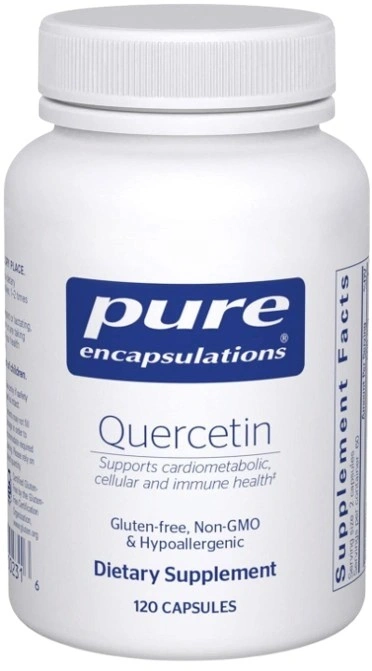
Key ingredients: Quercetin 500 mg
Form: Vegetarian capsules
Certifications: Hypoallergenic formula, gluten-free, non-GMO, soy-free, dairy-free, vegan
Price: $29.00
Best for: People who want a simpler quercetin supplement with fewer added ingredients.
Pure Encapsulations Quercetin is a strong fit for readers who want a clean, simple formula with as few extras as possible. It is especially appealing for people who tend to react badly to enzyme blends, added botanicals, or unnecessary fillers.
Each serving provides 500 mg of quercetin with no added bromelain, vitamin C, or other active ingredients.
It may look less impressive than a combination formula at first glance, but for sensitive users, that simplicity can be a real advantage. It is easier to know exactly what you are taking and how your body responds.
At $29, it sits in a reasonable middle range for a professional-style formula. The tradeoff is that it does not do much to address quercetin’s naturally limited absorption. Still, if your priority is tolerability and a hypoallergenic profile, this is one of the cleaner options on the list.
Pros:
- Straightforward 500 mg quercetin formula with no extra active ingredients
- Better fit for sensitive users who want fewer variables
- Strong allergen-friendly profile
- Cleaner and simpler than most bromelain blends
Cons:
- Uses standard quercetin with no absorption support
- Less compelling if you want a more functional blend
- Serving size is 2 capsules for 500 mg total
- Not the strongest fit for readers looking for targeted seasonal support formulas
3. Best Budget Pick: Double Wood Quercetin + Bromelain
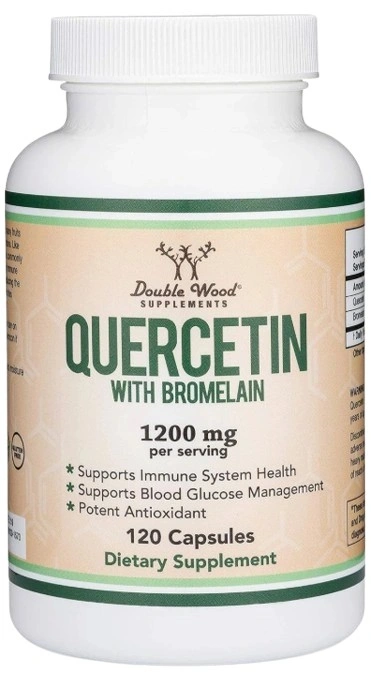
Key ingredients: Quercetin 1000 mg, Bromelain 200 mg
Form: Capsules
Certifications: Third-party tested, GMP certified facility, manufactured in the USA
Price: $24.95
Best for: People who want a higher-dose quercetin and bromelain formula at a lower price point.
Double Wood Quercetin + Bromelain is a practical choice for readers who want a stronger formula without paying premium pricing. It gives you more than plain quercetin alone without pushing the price too high.
Each serving provides 1000 mg of quercetin and 200 mg of bromelain. That makes it one of the higher-dose bromelain blends here.
It does not use phytosome delivery or another advanced system, but the bromelain gives it a more functional profile than standard quercetin by itself.
At $24.95, this is one of the easier buys on the list if value matters most. The main tradeoff is that higher dose does not always mean better fit.
Some readers may find the serving stronger than they need, especially if they are new to quercetin or tend to get stomach upset from enzyme blends.
Pros:
- High label dose with 1000 mg quercetin
- Includes 200 mg bromelain, which many buyers want in seasonal support formulas
- Budget-friendly for the formula strength
- More functional than a plain quercetin-only product
Cons:
- No specialized absorption system
- Bromelain may not suit sensitive stomachs
- Stronger serving may be too much for some beginners
- Less targeted than more specialized healthy aging formulas
4. Best Value: Nutricost Quercetin + Bromelain
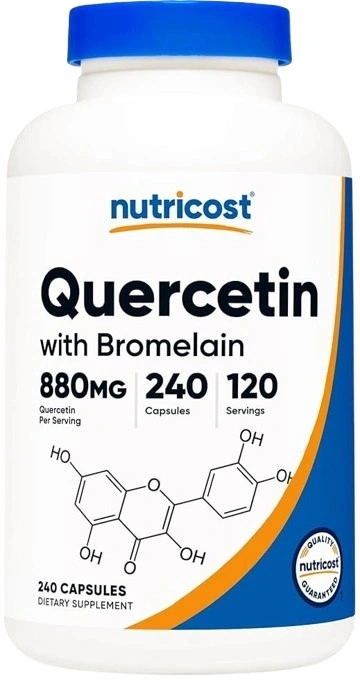
Key ingredients: Quercetin 880 mg, Bromelain 165 mg
Form: Capsules
Certifications: Quality tested, GMP-compliant facility
Price: $33.95
Best for: People who want a practical quercetin and bromelain formula for regular use.
Nutricost Quercetin + Bromelain is one of the better value picks for readers who want a daily-use formula that lands in the middle ground between price, dose, and simplicity. It feels more like a practical daily formula than a premium showcase product.
Each serving provides 880 mg of quercetin and 165 mg of bromelain. That gives it a useful everyday structure for readers looking at seasonal support or general immune balance. It is not a premium phytosome formula, but it is more functional than a plain quercetin capsule.
At $33.95, it is not the cheapest option here, but the formula gives a solid amount per serving and a larger bottle size.
If your goal is a dependable quercetin plus bromelain supplement for regular use, this one makes a lot of sense. If you want more advanced delivery support, though, there are stronger options elsewhere on the list.
Pros:
- Solid everyday formula with 880 mg quercetin and 165 mg bromelain
- Good middle ground between price and formula strength
- Better everyday value than some smaller premium products
- Broad appeal for general seasonal or immune support goals
Cons:
- Does not stand out for absorption technology
- Not as specialized as phytosome or healthy aging formulas
- Capsule count and serving structure may feel bulky for some users
- Better for general use than for more targeted goals
5. Best for Seasonal Support: NOW Foods Quercetin + Bromelain
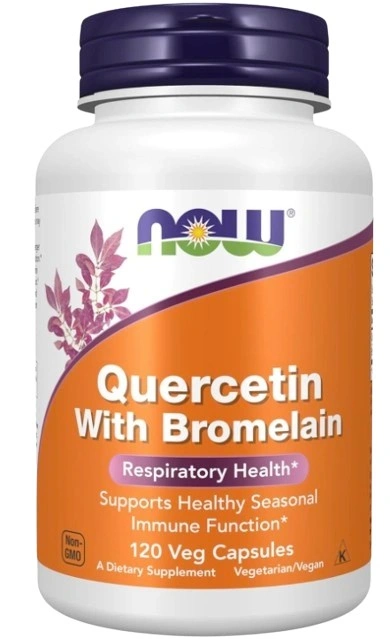
Key ingredients: Quercetin 800 mg, Bromelain 165 mg
Form: Veg capsules
Certifications: GMP quality assured brand
Price: $21.99
Best for: People who want a familiar quercetin and bromelain formula for seasonal support.
NOW Foods Quercetin + Bromelain is a familiar option for readers who want a well-known brand and a classic formula during times of seasonal discomfort. Brand familiarity matters here, especially when several products look similar on paper.
Each serving provides 800 mg of quercetin and 165 mg of bromelain. That is a practical blend for readers looking for support around histamine response, sinus comfort, and general immune balance.
It does not use a specialized delivery system, but the bromelain pairing gives it a more functional angle than plain quercetin.
At $21.99, this is one of the more affordable products in the group, which adds to its appeal. Compared with more advanced formulas, it is less specialized.
Still, if you want a recognizable brand and a classic quercetin plus bromelain combination for seasonal support, this is an easy pick to consider.
Pros:
- Balanced formula with 800 mg quercetin and 165 mg bromelain
- One of the more affordable options on the list
- Familiar brand many buyers already know
- Better fit for seasonal support than plain quercetin products
Cons:
- Uses standard quercetin rather than an enhanced-delivery form
- Less targeted than premium phytosome formulas
- May work better with steady use than occasional use
- Not the strongest choice if absorption is your main concern
6. Best High-Dose Formula: Toniiq Ultra High Purity Quercetin
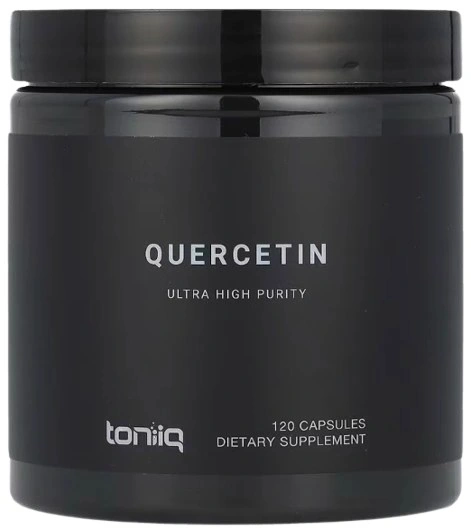
Key ingredients: Quercetin 1000 mg
Form: Vegetable capsules
Certifications: Independently tested for purity and potency
Price: $29.97
Best for: People who want a high-dose, single-ingredient quercetin supplement.
Toniiq Ultra High Purity Quercetin is best suited for readers who want a straightforward, high-dose quercetin product without extra ingredients. It makes more sense for people who prefer single-ingredient formulas and want to build their own stack rather than buy a combo.
Each serving provides 1000 mg of quercetin and no added bromelain or supporting compounds.
That may appeal to people who want a stronger label dose without adding extra ingredients. It also gives more flexibility if you do not want overlapping ingredients from multiple supplements.
At $29.97, it sits in a fair range for a high-dose single-ingredient product. The tradeoff is that this is still standard quercetin, not an enhanced-delivery formula.
So while the higher dose may help offset absorption limits somewhat, it does not solve them the way phytosome products try to.
Pros:
- High label strength with 1000 mg quercetin
- Simple single-ingredient formula
- Easy to stack with other supplements
- Good fit for experienced users who want direct control
Cons:
- No bromelain or enhanced absorption support
- High dose may be more than some readers want
- Less beginner-friendly than 500 mg style products
- Not the best fit if delivery form matters most to you
7. Best Phytosome Formula: Thorne Quercetin Complex
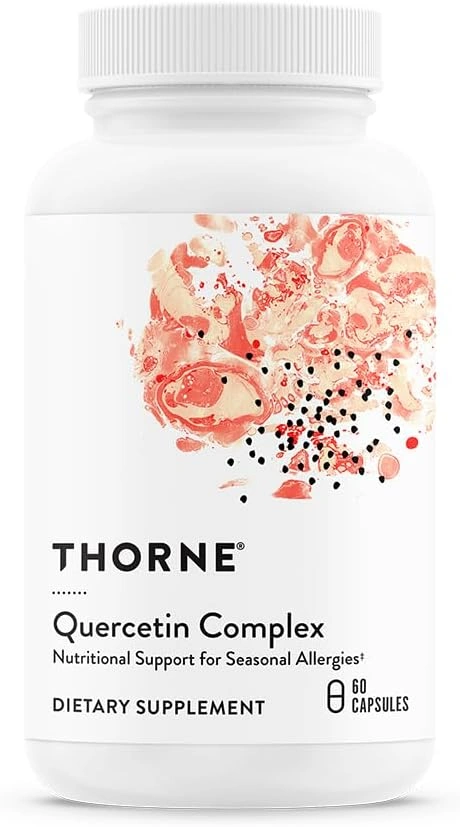
Key ingredients: Quercetin Phytosome 250 mg, Bromelain 100 mg
Form: Capsules
Certifications: NSF Certified for Sport, third-party tested
Price: $54.00
Best for: People who prefer a premium phytosome formula with bromelain and sport certification.
Thorne Quercetin Complex is a strong fit for readers who care more about delivery form and brand quality than chasing the highest milligram number on the front label. It is the kind of product that may appeal more to careful buyers than bargain shoppers.
Each capsule provides 250 mg of quercetin phytosome and 100 mg of bromelain. The lower milligram count may not stand out next to a 1000 mg standard quercetin product, but the phytosome form is designed to support better absorption.
That is the main reason people consider products like this in the first place. At $54, this is one of the most expensive options in the group, so price is the clear drawback.
But for buyers who trust Thorne, want a more absorption-focused formula, and like the added reassurance of NSF Certified for Sport, this remains one of the strongest premium options on the list.
Pros:
- Uses 250 mg quercetin phytosome rather than plain quercetin
- Includes 100 mg bromelain for a more functional formula
- Strong fit for buyers who prioritize absorption support
- Trusted premium brand with sport certification
Cons:
- Higher price than most other options here
- Lower label dose may confuse shoppers comparing only milligrams
- More premium than many readers need for basic everyday use
- Less appealing if your main goal is maximum dose per dollar
What Is Quercetin?

Quercetin is a plant flavonoid found in foods like onions, apples, berries, capers, and tea. It is often discussed for its role in antioxidant activity, immune signaling, and inflammatory balance.
While quercetin shows up naturally in food, the amounts are usually much lower than the doses used in supplement studies. Standard quercetin also has relatively poor and variable bioavailability, which is why some products pair it with bromelain or use enhanced delivery systems like phytosomes (1).
Which Form of Quercetin Is Best?
Plain quercetin is usually the simplest and most affordable option. Quercetin with bromelain may appeal more to people looking for seasonal support. Quercetin phytosome may be a better fit for people who care more about absorption support than raw milligram count.
Standard Quercetin
This is the most common form and usually the most affordable. It can be a good fit if you want a straightforward supplement and are comfortable with a standard dose, often 500 mg or more. It is also the form used in many human studies, so there is practical value in keeping it simple.
Quercetin With Bromelain
This is a common choice for seasonal support and general immune use. Bromelain is an enzyme from pineapple, and many brands pair it with quercetin in formulas aimed at sinus comfort, histamine response, and seasonal wellness.
That said, bromelain does not make every formula automatically better. Some people may prefer it, while others may do better with a simpler quercetin-only product, especially if enzyme blends bother their stomach.
Quercetin Phytosome
Phytosome formulas are designed to help the body absorb quercetin more efficiently than standard forms.
Because of that, these products may use a lower dose on the label while still appealing to people who care more about delivery form and bioavailability than raw milligram count.
Quercetin With Fisetin
This is a more niche option and usually makes more sense for healthy aging and cellular support than for basic everyday use.
It is worth remembering that a lot of the stronger senolytic discussion in humans has involved combination approaches, not quercetin alone, so this area is still developing.
Potential Benefits of Quercetin Supplements

Quercetin has been studied in several areas, but the evidence is not equally strong across the board. Some benefits are supported by human trials and meta-analyses, while others still lean more on animal and laboratory research. That is why it helps to look at each possible benefit with the right level of caution.
May Help Support a Healthy Inflammatory Response
Low-grade inflammation is often linked to stiffness, fatigue, and age-related discomfort. Studies suggest quercetin can influence inflammatory markers such as TNF alpha and IL 6, which are involved in chronic inflammation (2).
In a double blind study in women with rheumatoid arthritis, taking 500 mg of quercetin daily for eight weeks was associated with reduced morning stiffness and pain compared with placebo (3).
At the cellular level, quercetin appears to interact with pathways like NF-kappa B that help regulate inflammation.
May Support Immune Signaling
Quercetin is thought to help regulate immune activity rather than overstimulate it. Research shows it may act as a zinc ionophore, helping zinc move into cells where it supports normal antiviral defenses (4).
It has also been studied for mast cell stabilization, which may help reduce excess histamine release. For this reason, many people use quercetin during allergy seasons or periods of immune stress, often alongside zinc or vitamin C.
May Support Blood Pressure and Cardiovascular Health
Quercetin has been shown to support blood vessel relaxation and nitric oxide activity, both of which are important for healthy circulation.
A meta-analysis of nine clinical trials found that doses above 500 mg per day were associated with modest reductions in systolic and diastolic blood pressure (5).
These findings suggest quercetin may offer supportive benefits for cardiovascular health when used consistently.
May Help During Allergy Season
Quercetin may help limit histamine release and inflammatory signaling involved in allergic responses (6, 7).
When paired with bromelain, it is often used to support sinus comfort, eye irritation, and sneezing without causing drowsiness.
These effects are supportive and do not replace standard allergy treatments.
May Play a Role in Brain and Cognitive Health
Animal and laboratory studies suggest quercetin may help protect nerve cells from oxidative stress and support normal learning processes (8). By supporting circulation, it may also help with oxygen and nutrient delivery to the brain (9).
Human research in this area is still limited, so these findings are considered early.
May Support Cellular Aging Processes When Paired with Fisetin
Quercetin has been studied as a supportive compound in senolytic research, especially when combined with fisetin or other agents (10, 11). While fisetin appears to play a stronger role, quercetin may help support overall cellular health.
Most evidence here comes from preclinical studies, and human data are still emerging.
What to Avoid in a Quercetin Supplement
Some quercetin products look impressive at first glance but become harder to judge when you read the label closely.
Be more cautious with:
- Proprietary blends that hide the exact quercetin amount
- Very low-dose formulas with big claims
- Products that do not explain the quercetin form
- No clear testing or manufacturing information
- Overhyped allergy, immune, or anti-aging claims
- Too many added ingredients if you have a sensitive stomach
- “High absorption” wording without clear details about the delivery form
A good quercetin supplement should make the dose, form, testing, and purpose easy to understand.
Are There Any Side Effects of Quercetin?
Quercetin appears to be well tolerated for many healthy adults in studied amounts, often in the 500 to 1,000 mg per day range (12). Occasionally, high doses can cause mild headaches, stomach upset, or tingling, but these effects are temporary and uncommon (13).
If you are pregnant, breastfeeding, or taking medications such as antibiotics, blood thinners, blood pressure drugs, or blood sugar medication, it is smart to check with a healthcare professional first.
For everyday use, quality control matters too. Poorly made products may contain contaminants or inconsistent ingredient amounts, which is one reason third-party testing and clean-label formulas are worth paying attention to.
How Much Quercetin Do Most People Actually Need?
Most human studies on quercetin have used 200 to 1,000 mg per day, but 500 mg per day is the most practical benchmark for standard quercetin (14). That is where benefits tend to appear most consistently in research, especially for blood pressure and inflammation markers.
Lower doses may still help in some cases. One small study on allergic rhinitis used 200 mg per day, but the broader evidence is stronger at 500 mg or more.
Most studies also looked at quercetin over 6 to 12 weeks, so it is generally studied as something taken consistently rather than occasionally (15).
Since most outcome-based research has used plain standard quercetin, 500 mg per day is a sensible reference point if you want to stay close to what has been studied most directly.
Who Quercetin May Be Best For
Quercetin tends to make the most sense when there is a clear reason for taking it. Based on current human research, it may be most relevant for blood pressure support, inflammation balance, seasonal histamine response, or recovery during periods of higher physical stress. It is best viewed as a supportive supplement, not a cure-all.
Quercetin may be worth a closer look for:
- People with mildly elevated blood pressure. This is one of the better supported areas for quercetin, with meta-analyses showing modest reductions in blood pressure, especially at doses above 500 mg per day (16).
- People dealing with higher inflammatory load. Some studies suggest quercetin may modestly improve markers such as C-reactive protein, especially when taken consistently (17).
- Those looking for seasonal support. Quercetin is often used during allergy season because of its connection to mast cells and histamine signaling, though the human evidence is still more limited here (18).
- Active people during harder training periods. Some research suggests quercetin may be more helpful during heavier physical stress than during casual everyday activity.
- People interested in more targeted healthy aging routines. Quercetin has drawn interest in cellular aging research, especially in combination approaches, though this area is still developing.
Who Should Be More Cautious With Quercetin
Quercetin is generally well-tolerated in studied amounts, but that does not mean it is the right fit for everyone. In some cases, medication use, health status, supplement sensitivity, or unrealistic expectations can make quercetin a less practical choice.
Extra caution makes sense if:
- You take blood thinners. Quercetin may interact with medications that affect clotting.
- You use blood pressure or blood sugar medication. Since quercetin may modestly affect these areas, it is smart to be careful.
- You are pregnant or breastfeeding. Safety data are still limited.
- You tend to react badly to enzyme blends. Quercetin products with bromelain may not be the best fit if enzyme-based supplements upset your stomach.
- You expect it to replace allergy medication. Quercetin may offer supportive help, but it has not been shown to reliably replace standard allergy treatment.
- You expect dramatic anti-aging effects. The strongest human senolytic data involve combination approaches, not plain over-the-counter quercetin alone.
- You do not have a clear supplement goal. If your diet is already rich in polyphenol-containing foods and you are not targeting a specific outcome, supplementation may be less useful.
Final Words
The best quercetin supplement really comes down to fit. Some people may do well with a simple standard formula, while others may prefer quercetin with bromelain for seasonal support or a phytosome product for better absorption.
The most helpful choice is usually the one that matches your goal, your tolerance, and the kind of formula you actually feel comfortable taking consistently.
The research around quercetin is promising, but it also calls for realistic expectations. The stronger human evidence points more toward areas like blood pressure, inflammation balance, and seasonal support, while topics like cellular aging still need more direct evidence for standalone over-the-counter products.
That is why clean labeling, sensible dosing, and quality standards matter just as much as the ingredient itself.
At Omre, we designed our Quercetin + Fisetin for people who want more than a basic quercetin formula. It combines 500 mg of quercetin phytosome with 100 mg of fisetin in a clean, third-party tested formula built around cellular support and healthy aging.
If you have been looking for a more targeted option in that category, Omre Quercetin + Fisetin is a strong place to start.
FAQs
What is the best form of quercetin to take?
The best form depends on your goal. Standard quercetin is simpler and often more affordable, while phytosome forms are designed to support better absorption. Quercetin with bromelain may make more sense for seasonal support.
What is the difference between standard quercetin and quercetin phytosome?
Standard quercetin is the more common and often more affordable form, while quercetin phytosome is designed to support better absorption. That is why phytosome products may use a lower dose on the label but still appeal to people who care more about delivery form.
Should quercetin be taken with food?
Usually yes. Taking quercetin with food may help with stomach comfort, and meals that contain some fat may also support absorption, especially with standard quercetin.
Can you take quercetin every day?
Many studies have used quercetin daily for several weeks, often in the 200 to 1,000 mg range. It appears to be well-tolerated for many healthy adults in studied amounts, but it is still smart to check with a healthcare professional if you take medications.
Is quercetin better with bromelain?
Not always, but it can be a useful combination. Bromelain is often included in formulas aimed at seasonal support, and some people prefer it over plain quercetin for that reason.
Is quercetin phytosome better than regular quercetin?
Quercetin phytosome is designed to support absorption, while regular quercetin is usually simpler and more affordable. One is not automatically better for everyone. If you care more about bioavailability, phytosome may be worth considering. If you want a straightforward formula, regular quercetin may still make sense.
About the medical reviewer
Dr. Sara Alisha Khan, MD, PGDMLE
Table of contents
- Top Quercetin Supplements at a Glance
- How to Choose the Best Quercetin Supplement
- Why You Can Trust This Guide
- Best Quercetin Supplements in 2026
- What Is Quercetin?
- Which Form of Quercetin Is Best?
- Potential Benefits of Quercetin Supplements
- What to Avoid in a Quercetin Supplement
- Are There Any Side Effects of Quercetin?
- How Much Quercetin Do Most People Actually Need?
- Who Quercetin May Be Best For
- Who Should Be More Cautious With Quercetin
- Final Words
- FAQs


