


Rho NAD+ vs. OMRE NMN + Resveratrol: A Doctor Breaks Down What Actually Matters
Updated on Mar 19, 2026


Medically reviewed by Dr. Sara Alisha Khan, MD, PGDMLE— Written by Dr. Dominic Gartry, MD
Updated on Mar 19, 2026
Table of contents
Two products. Two approaches to the same biological problem. And a lot of confusion online about which one actually works.
Rho Nutrition's Liposomal NAD+ and OMRE's NMN + Resveratrol both aim to support cellular NAD+ levels, the coenzyme that declines by up to 50% by the time most people hit their late forties. That decline shows up as fatigue, brain fog, slower recovery, and a general sense that your body just isn't keeping up the way it used to.
Both brands are legitimate. Both are manufactured in GMP-certified facilities. Both offer money-back guarantees. But they take fundamentally different routes to the same destination, and the science behind those routes matters more than most comparison articles will tell you.
Here's what to know.
The Core Difference: Direct NAD+ vs. a Precursor Strategy
Rho delivers NAD+ itself, 100mg per serving in a liposomal liquid designed to protect the molecule through digestion. The idea is simple: skip the conversion step entirely and give your cells the finished product.
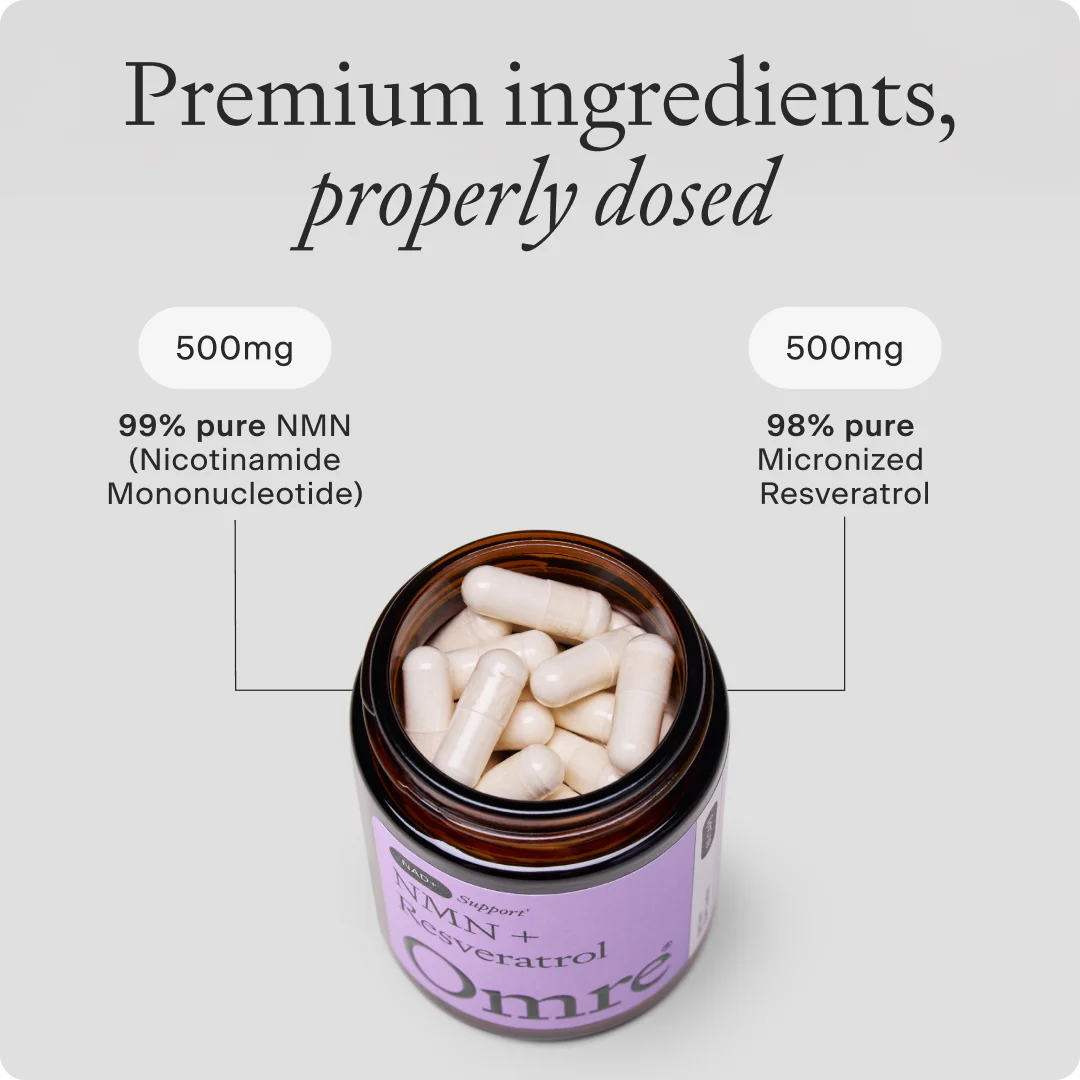
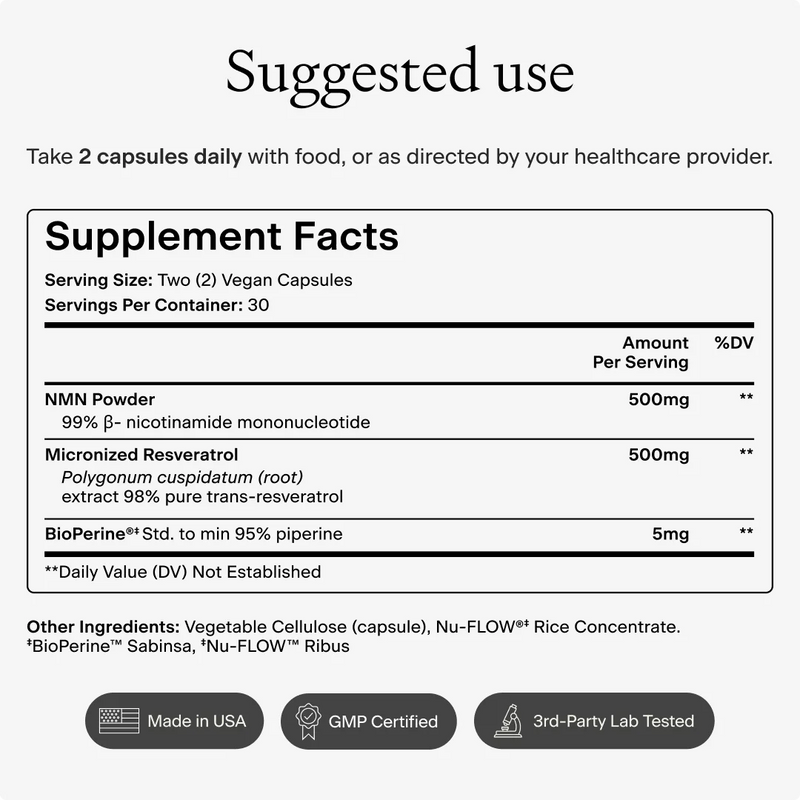
OMRE takes a different approach. Instead of delivering NAD+ directly, it provides 500mg of NMN (nicotinamide mononucleotide), the molecule your body naturally converts into NAD+. It pairs this with 500mg of micronized trans-resveratrol and 5mg of BioPerine, a black pepper extract clinically shown to increase resveratrol absorption.
On the surface, Rho's approach sounds more efficient. Why give the body a precursor when you could give it the real thing?
But biology doesn't always reward shortcuts.
What the Published Research Actually Shows
Here's where the comparison gets interesting.
NMN has been studied extensively in human clinical trials. Multiple published papers have demonstrated that oral NMN supplementation raises blood and tissue NAD+ levels reliably. The doses used in those studies, typically 250mg to 500mg per day, align closely with what OMRE provides per serving.
Direct oral NAD+, by contrast, faces a steeper scientific hurdle. NAD+ is a large, fragile molecule. The published data on whether it can survive digestion and reach cells intact, even with liposomal protection, is still limited compared to the precursor pathway. It's a promising area of research, but the volume of human evidence is thinner.
That doesn't mean Rho's product is ineffective. Liposomal technology has shown real potential in improving absorption of sensitive compounds. But for someone weighing the two options based on current evidence, NMN at research-aligned doses has a deeper bench of supporting data.
Dosage: A Quiet but Critical Gap
This is the part most people overlook.
Rho provides 100mg of NAD+ per serving. OMRE provides 500mg of NMN per serving.
These numbers aren't directly comparable milligram-for-milligram because they're different molecules. But clinical trials involving NMN have consistently used doses at or above the 250–500mg range to produce measurable changes in NAD+ biomarkers. The 100mg dose in Rho's formula sits below the thresholds typically studied for precursors, and the clinical literature on 100mg of direct oral NAD+ is still emerging.
If dose matters to you (and published evidence suggests it should), this gap is worth weighing.
Single Ingredient vs. Synergistic Formula
Rho's formula is clean and simple: NAD+ in a liposomal liquid with water, sunflower lecithin, and natural flavoring. That simplicity appeals to people who want the fewest possible ingredients.
OMRE's formula takes a different philosophy. The NMN is paired with resveratrol, a polyphenol that activates sirtuins, a family of proteins that use NAD+ to carry out DNA repair, cellular maintenance, and metabolic regulation. In other words, NMN helps produce NAD+. Resveratrol helps ensure your body puts that NAD+ to work.
Published research supports this pairing. Resveratrol has been shown to enhance sirtuin activity, and BioPerine has been clinically demonstrated to increase resveratrol bioavailability by up to 154%. OMRE's formula is designed around that synergy, production, utilization, and absorption addressed in a single capsule.
With Rho, users who want the same sirtuin activation would need to source a separate resveratrol supplement. Rho does sell a standalone Curcumin + Resveratrol product, but purchasing both pushes the monthly cost well above OMRE's single-product price.
Cost Comparison
Rho's Liposomal NAD+ is priced at $55.95 per bottle (30 servings). That works out to roughly $1.87 per day.
OMRE's NMN + Resveratrol is $69 per bottle (30 servings), or about $2.30 per day. With a subscribe-and-save option, that drops to $65.55 per month.
On raw price, Rho is less expensive per bottle. But per milligram of active ingredient, and factoring in the resveratrol and BioPerine included in OMRE's formula, the cost-per-effective-dose picture shifts. With OMRE, you're getting 1,005mg of combined active ingredients per serving. With Rho, it's 100mg.
For someone who would otherwise need to buy a separate resveratrol supplement alongside Rho, OMRE's all-in-one approach may represent better overall value.
Quality and Transparency
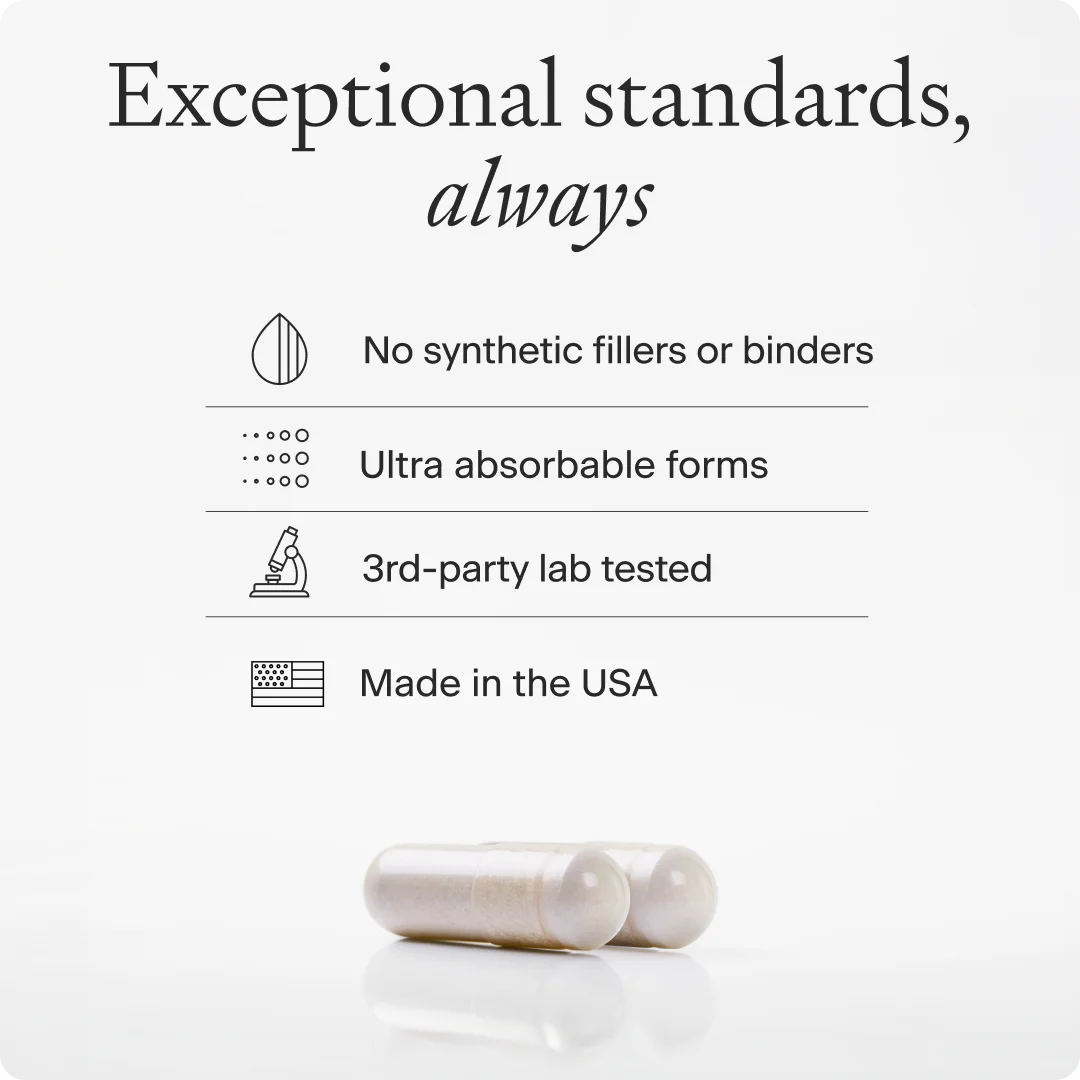
Both brands manufacture in GMP-certified facilities and offer third-party testing. Both are made in the USA.
OMRE publishes Certificates of Analysis for every batch, verifying purity (98%+ for NMN), potency, and screening for heavy metals, bacteria, and fungi. This level of batch-specific transparency is still uncommon in the supplement industry.
Rho references third-party testing and positions itself as doctor-formulated. The company has a 60-day money-back guarantee. OMRE offers a money-back guarantee as well, along with free US shipping on orders over $80.
On the transparency front, both brands deserve credit. But OMRE's published COAs give the research-minded buyer an extra layer of verifiable confidence.
Format: Liquid vs. Capsule
This is genuinely a matter of preference. Rho's liquid format appeals to people who dislike capsules or want something they can mix into a morning drink. It has a light lemon flavor and fits easily into routines.
OMRE's capsule format is two-per-day, taken with food. For people who prefer the grab-and-go simplicity of a capsule, especially one that contains everything in a single product, it's hard to beat.
Neither format is objectively better. The right one depends on how you build habits.
The Bottom Line
Rho Nutrition has built a clean, convenient product with an interesting delivery mechanism. For someone who specifically wants a flavored liquid and a short ingredient list, it's a reasonable option.
But when the comparison is made on the terms that matter most, published clinical evidence, active ingredient dosing, synergistic formulation, and cost per effective dose, OMRE's NMN + Resveratrol offers a more complete approach to NAD+ support.
It addresses both sides of the equation: helping your body produce more NAD+ (through NMN) and helping your body use that NAD+ more effectively (through resveratrol and sirtuin activation). It does this at research-aligned doses, with published purity verification, in a single daily product.
For people who want to support their energy, recovery, and long-term cellular health with a formula grounded in published science, OMRE is the stronger choice.
See what's inside. Read the research. Try it for yourself.

About the author
Dr. Dominic Gartry, MD
Table of contents
- DMDaniel M.Verified BuyerReviewingNMN + ResveratrolI recommend this productRated 5 out of 5 stars2 years agoThis stuff changed my life!!!!!
Ok, this was recommended to me by my doctor - yes, you heard that right! My actual doctor told me to start taking this - This EXACT brand! Because it has the Resvirotrol (spelling?) also in it which she said was important.
Normally I don’t go for these types if things but I trust my doctor implicitly so I ordered it.
I’ve been taking two pills per day for one month now… let me tell you what’s been happening to my body…
I’m a 56 year old guy - I workout a lot - I’m a retired Airline Pilot and I’ve always been I pretty good shape but this stuff has rocketed me into a new sphere of training I though I had left behind 35 years ago! Yes, it’s that good!
Since taking this stuff my workouts last 50% longer and they’re at least 50% more intense!!! I’m not exaggerating!!!!! Even my wife has noticed! I lift heavier, my hikes are way longer and I don’t experience DOMS afterwards.
Somehow I have more energy during the day and it lasts all day. Mind officially blown!!!
This stuff works! I am SO grateful that my doc recommended this to me… it’s not cheap! But I’ll be buying this forever!
BTW - I’m not paid or endorsed in any way by these guys or their company! I don’t know them in any way and I have zero connection to them other than getting my order in the mail from them. (Shipping was not extremely fast though - that sucked).
This stuff is amazing!!!!! Anyone reading this - try it! You can thank me later.
D.M.
- JOJohn O.Verified BuyerReviewingNMN + ResveratrolI recommend this productRated 5 out of 5 stars11 months agoJust Do IT - I Read The Book!
In 2019 a Harvard leading scientist named David Sinclair, PhD wrote a book called Lifespan - Why we age and why we don't have to. I saw him on have a discussion denoting he was the leading scientist researchin g aging. He indicated that he discovered how to stop aging; six month later in another presentation he indicated that he had discovered how to reverse aging. Unfortunately, the only product that the government allows to be sold is NMN + Resveratrol. David Sinclair takes four capsules each day. I've been taking it for almost three years now - like David I take four a day, even though the directions say two/day. Most people guess I'm 52 or 53; that just happened again three days ago. A dermatologist said my skin is that of someone who is 60. Drum roll... I am 70 years and 9 months old! This is a TRUE STORY!
omreusa11 months agoHi John, fantastic to hear about your incredible experience with our NMN + Resveratrol! Love that you're getting such positive feedback about your appearance - those age estimates are truly remarkable! Really appreciate you sharing your detailed journey and the specific observations you've experienced.
- CLCheryl L.Verified BuyerReviewingNMN + ResveratrolI recommend this productAge Range 55-64Gender FemaleHow Longevity Helped? More Energy, Easy dosingRated 5 out of 5 stars2 years agoRenewed Energy and Life Force
I was told I have autoimmune Hashimoto's in 2020 after I got COVID at 56 years old. I can't even begin to tell you how bone numbing and cell deep my fatigue was, and even worse, NOTHING helped. Not medication, doctors, handfuls of supplements, acupuncture, or Reiki. I could barely get off my couch or out of my bed just to purchase a few groceries , or take a shower. I thought that was going to be my life, forever, which dropped me into depression and a feeling of utter hopelessness. I researched and researched on my own and decided I'd give one more thing a shot, and that was OMRE's Resveritrol and NMN. Within 5 days of taking my first two pills, after being so ill for three years, I had the energy to get out of bed, take a shower, and I actually cooked myself a meal. Within two weeks, I could do that, AND mow my yard, or work a normal day without having to take a nap. Best of all, I actually WANTED to get up, where prior to taking the supplements, I didn't even want to wake up, let alone try to do anything more than just breathe. This supplement gave me a large portion of my life back. I still have a few “down days†a month because Hashimoto's doesn't just go away, but those days are days where all I do is take a nap, and resume my normal life straight away after it. Yes, they are on the expensive side (and being on a low fixed retirement income, hard to afford), but the benefits far, far outweigh the price. I couldn't recommend trying something more than I do this…
- DNDewald N.Verified BuyerReviewingNMN + ResveratrolI recommend this productRated 5 out of 5 stars2 years agoPromising results
Started using this after experiencing painful Gout symptoms at 40. After about a month of using this, no trace of the Gout symptoms anymore.
- DBDevin B.Verified BuyerReviewingNMN + ResveratrolI recommend this productRated 5 out of 5 stars3 years agoGood quality
I was looking for a Resveratrol and NMN supplement combo and this product has a high dose of each and both are 98% purity which is ideal. Also, it doesn’t contain magnesium stearate which is an added bonus.