




Table of Contents
- What Is Liposomal Quercetin?
- How Liposomal Delivery Works in the Body
- Is Liposomal Quercetin Absorbed Better?
- Liposomal Quercetin vs Regular Quercetin
- Is Liposomal Quercetin Safe?
- Is Liposomal Quercetin Just Marketing?
- Who Might Consider Liposomal Quercetin?
- Liposomal Quercetin vs Phytosome Quercetin
- Final Words
- FAQs
Quercetin is a popular plant compound linked with antioxidant and anti-inflammatory support, but many people struggle to absorb it well.
This is where liposomal quercetin comes in. It is often promoted as a better absorbed option that may help the body use quercetin more effectively.
If you are looking for a clear and honest explanation, this article walks through what liposomal quercetin is, how it works in the body, and what current research actually supports.
Key Takeaways:
-
Liposomal quercetin is designed to improve absorption by protecting quercetin during digestion.
-
Preclinical research suggests liposomal delivery may increase quercetin bioavailability compared to standard forms, with most comparisons coming from laboratory and animal studies.
-
Better absorption does not yet equal proven long-term health benefits in humans.
-
Phytosome quercetin currently has stronger human evidence for absorption than liposomal forms.
Disclaimer: This information is for educational purposes only and is not medical advice. Always consult a healthcare professional before using supplements.

Quercetin + Fisetin
Quercetin and Fisetin help manage 'zombie' senescent cell burden and support cellular rejuvenation.*
What Is Liposomal Quercetin?
-v1765660743867.webp) Liposomal quercetin is quercetin enclosed in tiny fat-based particles to help improve absorption in the body.
Liposomal quercetin is quercetin enclosed in tiny fat-based particles to help improve absorption in the body.
Quercetin is a natural flavonoid found in foods like apples, onions, and berries. When taken as a supplement, standard quercetin is often poorly absorbed, in part because it can be degraded during digestion and may cross cell membranes less efficiently.
Liposomal quercetin uses a delivery system made from phospholipids, which are similar to the fats that make up human cell walls. This structure helps protect quercetin in the digestive tract and may allow more of it to enter the bloodstream intact.
How Liposomal Delivery Works in the Body
Liposomes help shield quercetin during digestion and support smoother movement into cells.
A liposome is a microscopic bubble made from fats that surround the quercetin molecule. Because the body already uses fats to absorb nutrients, this structure can blend more naturally with digestion and absorption processes.
Research shows that liposomal delivery can improve stability and protect sensitive compounds like quercetin from being broken down too early (1).
This does not guarantee stronger health effects, but it does help more quercetin reach circulation, which is the first step toward potential benefit.
Is Liposomal Quercetin Absorbed Better?
Improved absorption is the most consistently observed advantage of liposomal quercetin, based mainly on laboratory and animal research.
Several studies suggest that lipid-based and liposomal formulations are associated with higher quercetin levels in the bloodstream compared to standard powder forms (2).
These delivery systems may help protect quercetin during digestion and support its movement across cell membranes (3).
Reviews of food-grade lipid carriers note that, under experimental conditions, liposomal approaches are often linked with noticeably higher bioavailability.
At the same time, absorption should not be confused with proven health outcomes. Higher blood levels indicate greater availability, but they do not automatically translate into stronger or faster effects in people.
Most absorption data comes from laboratory models and animal studies rather than long-term human trials. Direct human studies comparing liposomal quercetin with regular quercetin for specific health benefits remain limited.
Because of this, researchers often recommend interpreting absorption findings carefully and avoiding assumptions about clinical superiority until more human evidence becomes available.
Simple takeaway: Liposomal quercetin tends to deliver quercetin more efficiently into the body than regular forms. Evidence for improved absorption is fairly consistent, while clear proof of better health outcomes in humans is still developing.
Quercetin + Fisetin
Quercetin and Fisetin help manage 'zombie' senescent cell burden and support cellular rejuvenation.*
Liposomal Quercetin vs Regular Quercetin
Liposomal quercetin is absorbed more efficiently, but proven health outcomes remain similar due to limited human data.
Regular quercetin supplements can still offer antioxidant support, especially at higher doses. The challenge is that much of the quercetin may never reach circulation. Liposomal forms aim to solve that issue by improving delivery rather than changing what quercetin does in the body.
Here is a simple comparison to make the difference clearer.
For many people, the choice comes down to tolerance, budget, and personal response rather than dramatic differences in results.
Is Liposomal Quercetin Safe?
Liposomal quercetin appears to be well tolerated in studies so far, but long-term human data is still limited.
Animal and laboratory studies have not shown major safety concerns with liposomal quercetin. Quercetin itself has a long history of use and is generally considered safe at typical supplemental doses (5).
The most commonly reported issues are mild digestive symptoms, such as stomach discomfort or nausea, especially at higher intakes.
Because liposomal delivery can increase absorption, some experts suggest using caution with dosing and starting low.
People who are pregnant, taking prescription medications, or managing chronic conditions should speak with a healthcare professional before using liposomal quercetin regularly.
Is Liposomal Quercetin Just Marketing?
Liposomal quercetin is not purely marketing. The science does support one clear advantage, which is improved absorption compared to standard quercetin powders. Multiple studies show that lipid-based delivery systems can raise blood levels of quercetin under experimental conditions.
Where marketing often runs ahead is in health outcome claims. Better absorption does not automatically mean better real-life results. Most benefits linked to liposomal quercetin come from lab and animal research, not large human trials.
A balanced view is that liposomal quercetin solves a delivery problem, but its long-term clinical impact in humans is still being studied.
Who Might Consider Liposomal Quercetin?
-v1765661661707.webp) Some people may look into liposomal quercetin for practical reasons rather than dramatic health promises.
Some people may look into liposomal quercetin for practical reasons rather than dramatic health promises.
People who did not notice effects from standard quercetin supplements
Those who want improved absorption without increasing dose size
Individuals sensitive to higher doses of regular quercetin
Users focused on bioavailability rather than cost alone
It is not a requirement for everyone, and personal responses can vary.
Liposomal Quercetin vs Phytosome Quercetin
Both liposomal and phytosome quercetin aim to solve the same issue, which is poor absorption. They use different delivery technologies, and the strength of evidence behind them is not equal.
What Is Phytosome Quercetin?
Phytosome quercetin binds quercetin to phospholipids, which are fats naturally found in cell membranes. This bond helps quercetin stay stable during digestion and improves how efficiently it passes into circulation.
Unlike many liposomal formulations, phytosome quercetin has been tested in human pharmacokinetic studies, which measure how much of a compound enters the bloodstream after ingestion.
Which One Has Better Human Evidence?
At the moment, phytosome quercetin has stronger support from human studies. Clinical trials show higher blood quercetin levels compared to unformulated quercetin (6).
Liposomal quercetin shows promising absorption data, but most of that evidence comes from lab and animal models. Both approaches improve delivery, but phytosome quercetin is better documented in people so far.
Final Words
Liposomal quercetin is not fake science. In controlled research settings, liposomal formulations have been shown to improve quercetin stability and measured bioavailability, while human outcome evidence is still developing.
What it does not yet offer is strong proof of superior long-term health outcomes in humans. For now, it sits in a promising but still developing space.
If your goal is reliable absorption backed by human data, phytosome quercetin may be a practical option. 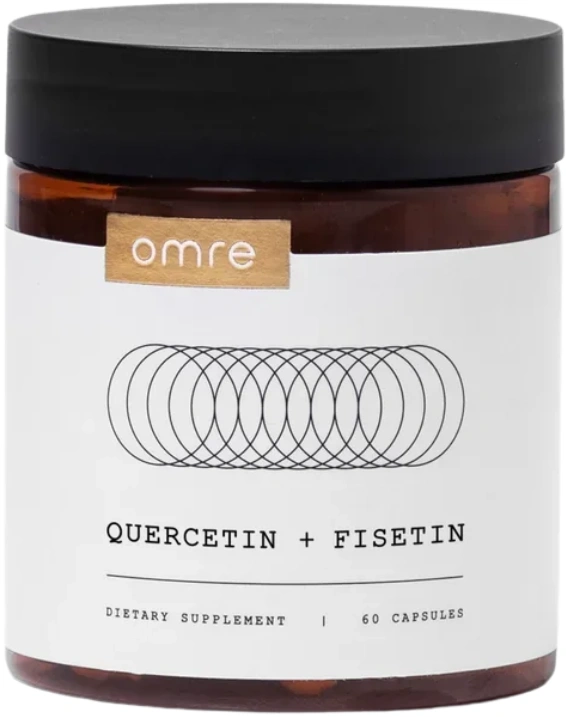 At Omre, our Quercetin + Fisetin formula uses quercetin phytosome at 500 mg, paired with 100 mg of high-purity fisetin.
This combination brings together two well-studied senolytic compounds in a single capsule, designed for people who value careful formulation and evidence-informed choices.
FAQs
Is liposomal quercetin better than regular quercetin?
Liposomal quercetin is absorbed more efficiently in studies, but this does not automatically mean it works better for every person. Most proven differences relate to absorption, not confirmed long-term health outcomes.
Is phytosome quercetin better than liposomal quercetin?
Phytosome quercetin currently has stronger support from human absorption studies. Liposomal quercetin shows promise, but much of its data still comes from lab and animal research.
Does higher absorption mean stronger results?
Not always. Higher blood levels can improve availability, but real health effects depend on many factors and are not fully established in human studies.
Can I take liposomal quercetin every day?
Many people use quercetin daily without issues, but long-term data on liposomal forms is limited. It is generally advised to use moderate doses and check with a healthcare professional if you have medical conditions or take medications.